Introduction
We know that where a child grows up and goes to school will shape how active they are. However, their ability to be active is shaped not just by where they live, but by the systems around them – family routines, school experiences and affordability for example.
At Greater Manchester Moving our ambition is simple: to enable active lives for all. With an emphasis is on those last two words: for all.
Too often children and young people are seen as separate from wider system work. However, we know that for wider system change and societal inequalities to be tackled, we need to break down silo’s and collaborate across systems. Our Place Partnership and Children and Young People Teams recognise this, and have come together to write this article, highlighting how we work in Greater Manchester to ensure active lives for all children and young people.
In this article, we explore how Greater Manchester is using place-based approaches to tackle inactivity and inequality among children and young people, and what we are learning from this work.
The Challenge
While progress has been made in boosting physical activity levels among children and young people in Greater Manchester, new data from Sport England reveals that inactivity remains too high, and deep-rooted inequalities remain particularly for girls, children from lower-income families, Asian and Black children, and some secondary-aged children without access to outdoor spaces or who identify as another gender. These inequalities often overlap, meaning some children and young people face multiple barriers to being active.
Sport England’s Active Lives Children and Young People Survey (2024-25) for Greater Manchester shows that while Children and Young People are more active than before but there is more to do. The latest data highlights the need for place-based solutions that ensure every child, regardless of background or postcode, can be active in ways that they enjoy.
Read more about inequalities in children and young people data on our website.
The key life transition points for children and young people often coincide with drop off in physical activity. These key transition points include:
Changes in school stage or educational setting: Moving from early years to primary school or from primary to secondary school can sometimes lead to a decrease in physical activity during this period of change. This is usually due to increased academic pressures, changes in social dynamics, and less supportive environments for movement.
Entry into adolescence: Puberty and the shift toward more sedentary social activities (e.g., screen time) can lead to a decline in participation in sport, physical activity and play.
Changes in family structure or living environment: Moving to a new home, family breakdowns, or financial difficulties, can disrupt daily routines and make it harder for children and young people to access sports and physical activities.
Place-based approaches in Greater Manchester, can ease transitions points for our Children and Young People and make physical activity more accessible and relevant.
How can place-based approaches support children and young people to be active?
Children and young people’s opportunities to be physically active are shaped by a wide range of interconnected factors, far beyond just personal choice or motivation. These include:
- Families, schools, and community organisations
- Access to parks, green spaces, and safe streets
- Transport, youth services, and local policies
- Social and cultural environments in their neighbourhood
When these factors work well together, being active can feel safe, accessible and part of everyday life. When they do not, barriers to activity can quickly grow.
Yet despite this, many of the systems designed to improve physical activity do not naturally encourage children and young people to meaningfully engage in shaping the solutions. Too often, activity is designed around adult assumptions of what young people need, rather than the realities of their everyday lives and experiences. If we want place-based approaches to genuinely reduce inactivity and inequalities, we must be much more intentional about creating the conditions for children and young people to influence, shape and co-create the opportunities around them.
This is why place-based approaches are so important for tackling inactivity and inequality among children and young people. They allow us to understand the realities of a specific community and work alongside local partners and residents to create opportunities that genuinely reflect the lives of the young people who live there. Rather than expecting children and young people to fit into pre-designed activities, place-based working starts with listening, relationships and local context.
To translate place-based principles into practice, Greater Manchester is focusing on two complementary approaches. Physical Literacy helps us understand how children develop positive relationships with movement, while the Lundy Model helps ensure children and young people influence the decisions that affect them.
Physical Literacy
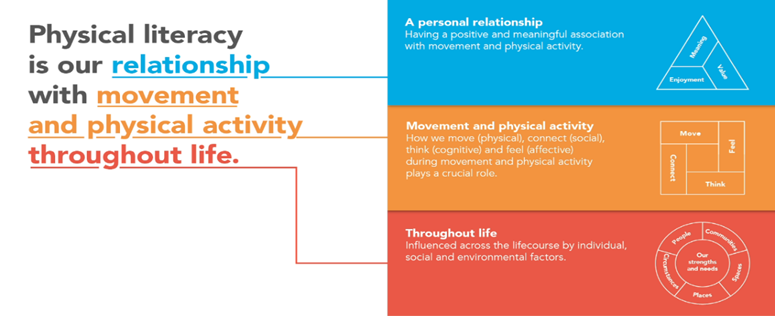
A physical literacy approach recognises that movement is not just about sport, competition or performance. It is about confidence, motivation, enjoyment, relationships and feeling connected to movement in ways that matter personally. This is particularly important for children and young people who may feel excluded from traditional activity offers or who do not identify with organised sport. By valuing different experiences, abilities and motivations, physical literacy helps us create more inclusive and flexible opportunities for movement that reflect the context of a young person’s life and community.
Physical Literacy plays a key role in their physical, mental, and emotional wellbeing. It fosters a positive, lifelong relationship with movement and activity, influencing areas like:
- Physical education and school sports
- Active environments and community recreation
- Health, play, and access to green spaces.
Physical literacy in practice
In Broughton, Salford, weekly Yiddish dance sessions for girls aged 6–17 from the ultra-Orthodox Jewish community were developed in response to local barriers to physical activity. While many girls understood the health benefits of exercise, activity was often not prioritised alongside studying, family responsibilities, and social commitments.
The project addressed this by focusing on culturally relevant dance rather than formal exercise. Learning traditional dances for weddings provided a meaningful incentive for participation, helping girls develop confidence, enjoyment, social connection, and regular movement in a way that felt appropriate and valued within the community.
The sessions demonstrate how place-based approaches can support physical literacy by creating positive and meaningful experiences of movement that reflect young people’s identities, culture, and everyday lives. Rather than focusing only on physical competence or structured sport, the project supported broader elements of physical literacy including motivation, confidence, enjoyment, and a sense of belonging. By adapting physical activity around what mattered to the girls and their families, the programme created opportunities for sustained engagement in movement in ways that were accessible, culturally relevant, and personally .
“I didn’t have so many friends. Since joining Yiddish Dance I have made so many new friendships and feel part of a social group! It is such a good feeling!” – 14-year-old participant.
Lundy Model
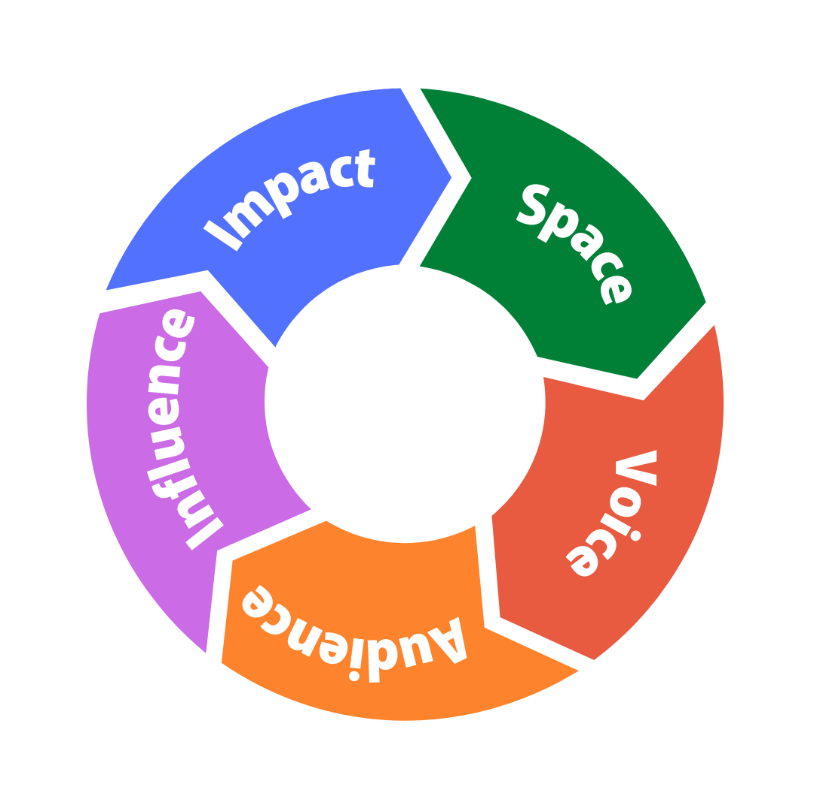
The Lundy Model provides a practical framework for ensuring children and young people are genuinely involved in decision-making. It focuses on creating space for young people to share their views, enabling them to have a voice, ensuring they have an audience, and critically, making sure their views influence action. Within place-based working, this matters because young people understand the barriers, opportunities and realities of their communities in ways that adults often cannot fully see.
Lundy model in practice
In Wigan, Be Well invested in a community-led play initiative to strengthen opportunities for children and families to be active together within their own neighbourhoods. Working alongside Northern Heart and Soul CIC and Springfield, Beech Hill and Gidlow CommUnity, the programme supported local groups to develop and use community play kits designed to encourage active play.
The investment focused on four key objectives: building stronger community connections, supporting the development and safe delivery of play opportunities, enabling communities to take ownership of local provision, and creating a borough-wide National Play Day celebration. Through this work, community groups were empowered to lead their own activities, creating sustainable and locally relevant opportunities for children and families to be active together.
A key strength of the initiative was the way it reflected the principles of the Lundy Model of Participation. Rather than introducing pre-designed activities, local families and residents identified what would work best within their own neighbourhoods (space and voice). Those views were listened to by community organisations and delivery partners responsible for shaping the programme (audience), and were used to inform the design and delivery of local play opportunities ensuring activities reflected the needs, interests and realities of local families (influence).
In partnership with GM Moving, Be Well supported workforce development through youth work delivery and the embedding of youth voice within the co-design of sessions. A training day was designed and led by Youth Focus North West, based in Wigan, to equip Be Well staff with an understanding of the Lundy Model of Participation from a youth work perspective. As a result, sports coaches, lifeguards and instructors are now better equipped to create safe, inclusive and equitable spaces for young people, while creating sessions that embed youth voice to increase participation.
This approach has strengthened relationships with youth workers from both universal youth clubs and targeted youth groups, helping to ensure that sport and leisure settings can become safe spaces for youth engagement and enjoyment where children and young people feel heard, valued and able to shape the opportunities available to them.
What have we learnt in our approach?
Our experience across Greater Manchester has reinforced that tackling inactivity and inequality among children and young people requires more than simply providing opportunities to be active. It requires understanding the realities of young people’s lives and working alongside them, their families and communities to shape solutions that feel relevant, accessible and meaningful.
The examples from Salford and Wigan demonstrate that there is no single approach that works everywhere. Communities have different strengths, cultures, challenges and aspirations. Place-based working allows local partners to respond to these differences, creating opportunities that reflect what matters to children and young people in place.
We’ve also learned that listening and acting on what young people say is vital. When children and young people are given meaningful opportunities to influence decisions, services and activities are more likely to meet their needs and sustain engagement over time. Similarly, a physical literacy approach reminds us that movement is about more than sport or exercise; it is about confidence, enjoyment, connection and belonging.
If we are serious about reducing inequalities, we must move beyond designing programmes for children and young people and instead design them with them. We encourage partners across Greater Manchester to consider how the principles of the Lundy Model and Physical Literacy can be embedded within their own policies, services and everyday practice, ensuring young people have both a voice in shaping opportunities and positive experiences of movement throughout their lives.
Find out more
For more information, visit the Children and Young People pages on the GM Moving website or contact Christine Bland (christine@gmmoving.co.uk) to learn more about how you can support active lives for children and young people in your community.