Recent data shows that activity levels for children and young people in Greater Manchester are the highest they’ve been since the survey began in 2017.
Currently, 50.1% of those aged 5–16 are active for at least 60 minutes a day. However, progress has not been equal.
Health is shaped early in life, but not all children have the same opportunities.
Activity levels are influenced by more than individual choice. Factors such as where children live, go to school, and grow up along with access to green spaces, safe streets, and affordable food – all play a role.
Sport England’s Active Lives data highlights key groups less likely to be active, including girls, children from lower-income families, Asian and Black children, and some secondary-aged children without access to outdoor spaces or who identify as another gender. The more of these characteristics a person has, the less active they’re likely to be.
In Greater Manchester, we look at all the things that can help or get in the way of people living more active lives. This means listening to people and organisations about their experiences, opportunities and challenges and using data such as Active Lives. Then we can understand the different factors that influence a child’s activity levels, and we can take action to reduce barriers and ensure every child benefits from movement, physical activity and sport.
So, what does the data tell us?
In the section below, we’ve explored the children and young people’s activity data, breaking it down by the key demographic areas. We’ve also gathered examples of related work from partners across Greater Manchester that is supporting those young people.
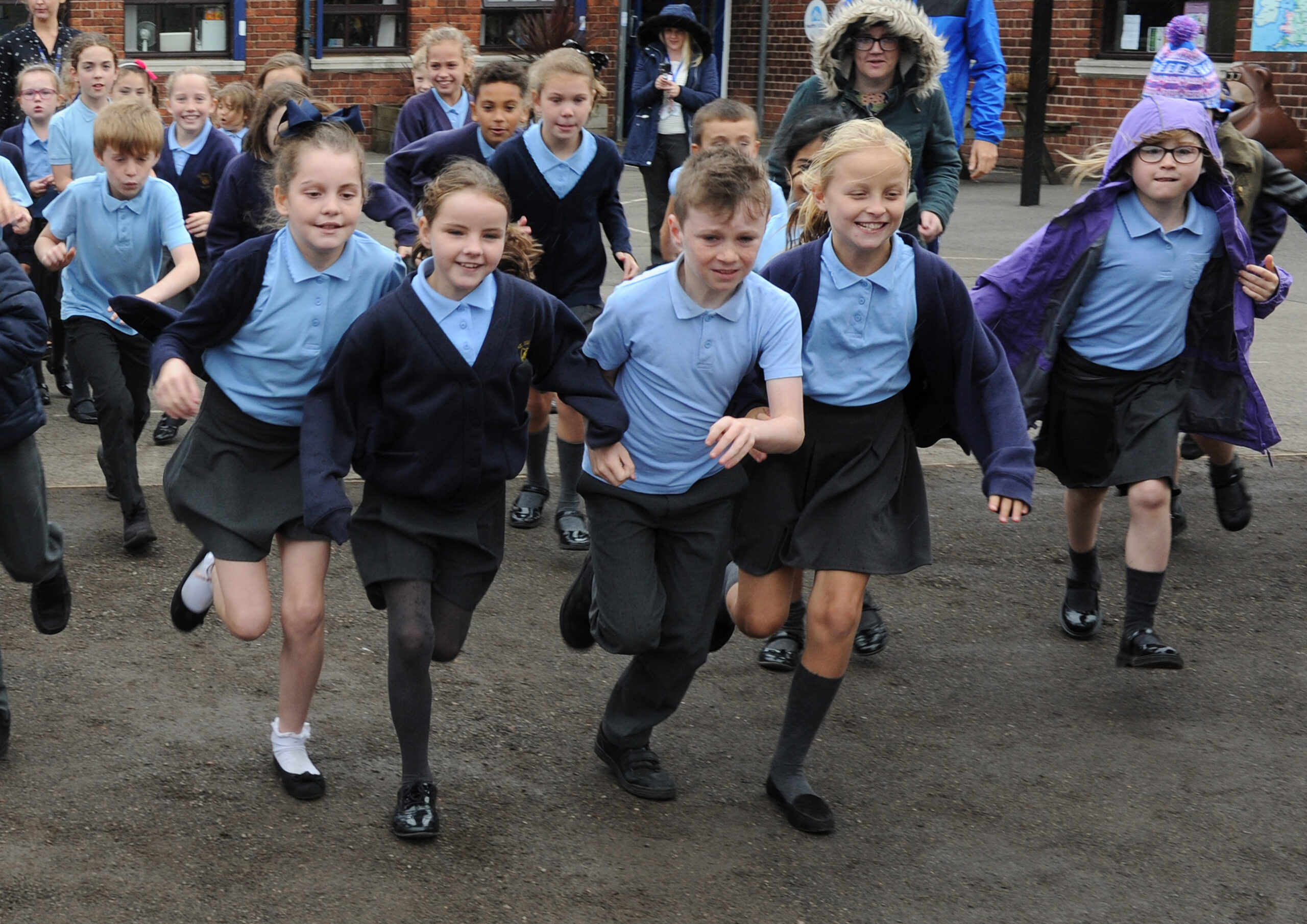
Gender
-
What the data tells us
Nationally, and in Greater Manchester, activity levels have increased for both boys and girls over the past year.
In Greater Manchester, activity levels for both are higher than the national average, and the difference between boys and girls activity levels are getting closer. Boys were 7.1% more likely to be active than girls the same age, this is now 5.7%.
#BeeWell data highlights ongoing differences in how girls experience physical activity, including barriers linked to confidence, enjoyment, and feeling comfortable taking part.
-
What is Greater Manchester doing in response?
Greater Manchester is focusing on positive, inclusive messaging that reflects what matters to young people. This includes promoting what is already working and supporting partners to create opportunities shaped by young people’s needs and preferences.
The Feel Good Your Way campaign focuses on girls finding activities they enjoy in ways and environments that feel right for them.
#BeeWell have developed Physical Activity Evidence Briefings, sharing insights and practical recommendations for schools and local authorities. Key headlines include addressing PE kit concerns, reducing gender stereotyping in sports and more opportunities for older girls.
Family Income
-
What the data tells us
-
- The biggest improvements in activity levels have been among children from more affluent families.
-
- Children from lower-income families are more likely to be less active outside of school, where cost and access can be barriers.
-
- 58.3% of children and young people in Greater Manchester live in some of the most deprived areas in England (the bottom 30%), up 5.3% since 2011.
-
- According to the Joseph Rowntree Foundation, child poverty is one of the most urgent challenges in Greater Manchester. It is concentrated in areas such as Manchester, Oldham, Bolton and Rochdale – which also tend to have lower activity levels.
-
-
What is Greater Manchester doing in response?
Partners across Greater Manchester are targeting support where it is most needed, for example:
-
- Opening School Facilities focuses on schools in more disadvantaged areas and where communities have fewer local facilities.
-
- Creating Active Schools (CAS) are typically based in more deprived areas (on average, 2 out of 10 on the Index of Multiple Deprivation). These programmes take a whole-school approach, supporting children to be active during the school day—particularly important for those who may not be able to access activities outside school (e.g. clubs).
-
Ethnicity
-
What the data tells us
-
- Children and young people in Greater Manchester are more ethnically diverse than the overall population. In 2021 (Census), 34% were from ethnic minority backgrounds, compared to 23.6% of all ages.
-
- Over the past two years, activity levels have increased for White British, Mixed and Black children and young people. However, they have decreased for Asian groups and slightly for White Other groups.
-
- Children and young people in Greater Manchester are more ethnically diverse than the overall population. In 2021 (Census), 34% were from ethnic minority backgrounds, compared to 23.6% of all ages.
-
-
What is Greater Manchester doing in response?
Out of school opportunities to attend physical activity sessions are limited when more than 90% of the young Muslim population attend Madrassah to learn about Islamic teachings outside of school. For this reason, a new female leadership programme has been commissioned by GM Moving in Bolton to develop confident, skilled leaders within Madrassah settings. It is being delivered by KRIMMZ Girls Youth Club and Bolton Muslim Welfare Trust – Health and Wellbeing Forum. Moving in Madrassah will support participants to learn skills including physical activity and sports delivery, mental health awareness, and pastoral care.
Age
-
What the data tells us
-
- CYP Mental Health and PA An Independent review (2024) highlights there is increasing concern about the mental health of children and young people in many countries, including England, with mid- to late-adolescence being an important life stage in which many mental health problems first emerge.
-
- Both Primary school and Secondary school levels of activity are higher than national and gradually increasing in Greater Manchester, but more so for Secondary school age.
-
- The amount of physical activity increased for both boys and girls at secondary school age, but boys showed a bigger increase than girls.
-
- However, for young people from lower-income families, activity levels did not change at all.
-
- CYP Mental Health and PA An Independent review (2024) highlights there is increasing concern about the mental health of children and young people in many countries, including England, with mid- to late-adolescence being an important life stage in which many mental health problems first emerge.
-
-
What is Greater Manchester doing in response?
The transition from primary to secondary school is a critical stage where physical activity levels often decline. In Greater Manchester, School Games Organisers (SGOs) provide targeted Transition Festivals for young people. These opportunities are delivered locally by SGOs for targeted Year 7 students. Following these festivals where students take part in non-traditional sports which breakdown social barriers, students often report a significant reduction in school related stress and a greater sense of belonging.
Special educational needs and disabilities (SEND)
-
What the data tells us
-
- This occurs despite 9 in 10 parents valuing physical health, as less than half feel they possess the necessary support to help their children stay active (Youth Sport Trust, 2024).
-
- Despite physical activity being vital for development, one-third of disabled children engage in less than 30 minutes of daily activity.
-
- This occurs despite 9 in 10 parents valuing physical health, as less than half feel they possess the necessary support to help their children stay active (Youth Sport Trust, 2024).
-
-
What is Greater Manchester doing in response?
-
- In Greater Manchester we understand the need to provide children and young people with special educational needs and disabilities the opportunity to be physically active. One of the focuses of the Greater Manchester School Games is to provide children with SEND with the opportunity to compete and participate in a range of activities, from competitive rowing events to multisport participation festivals. You can read more about this here.
-
- We also support the Youth Sport Trust Inclusion Network which brings together schools, community groups and other partners to share opportunities and resources linked to SEND young people. By working together and learning from each other, better conditions can be created for more active young people.
-
Christine Bland, Strategic Lead CYP at GM Moving said:
“Active Lives matters to every child and young person, and everyone has a part to play. We’re proud of the progress made in Greater Manchester, as shown by the data, but we know there are still inequalities to address. By placing sport, physical activity, and movement at the heart of conversations, practices, policies and strategies, while truly listening to the voices of children and young people and their families, we create meaningful and lasting change. This ensures healthy, active lives from early childhood through adulthood.”

Further information
For more information on the work taking place across Greater Manchester explore our Children and Young People webpage.
For information on how your school can get involved with the Active Lives CYP survey, please email Oliver Thomasson.