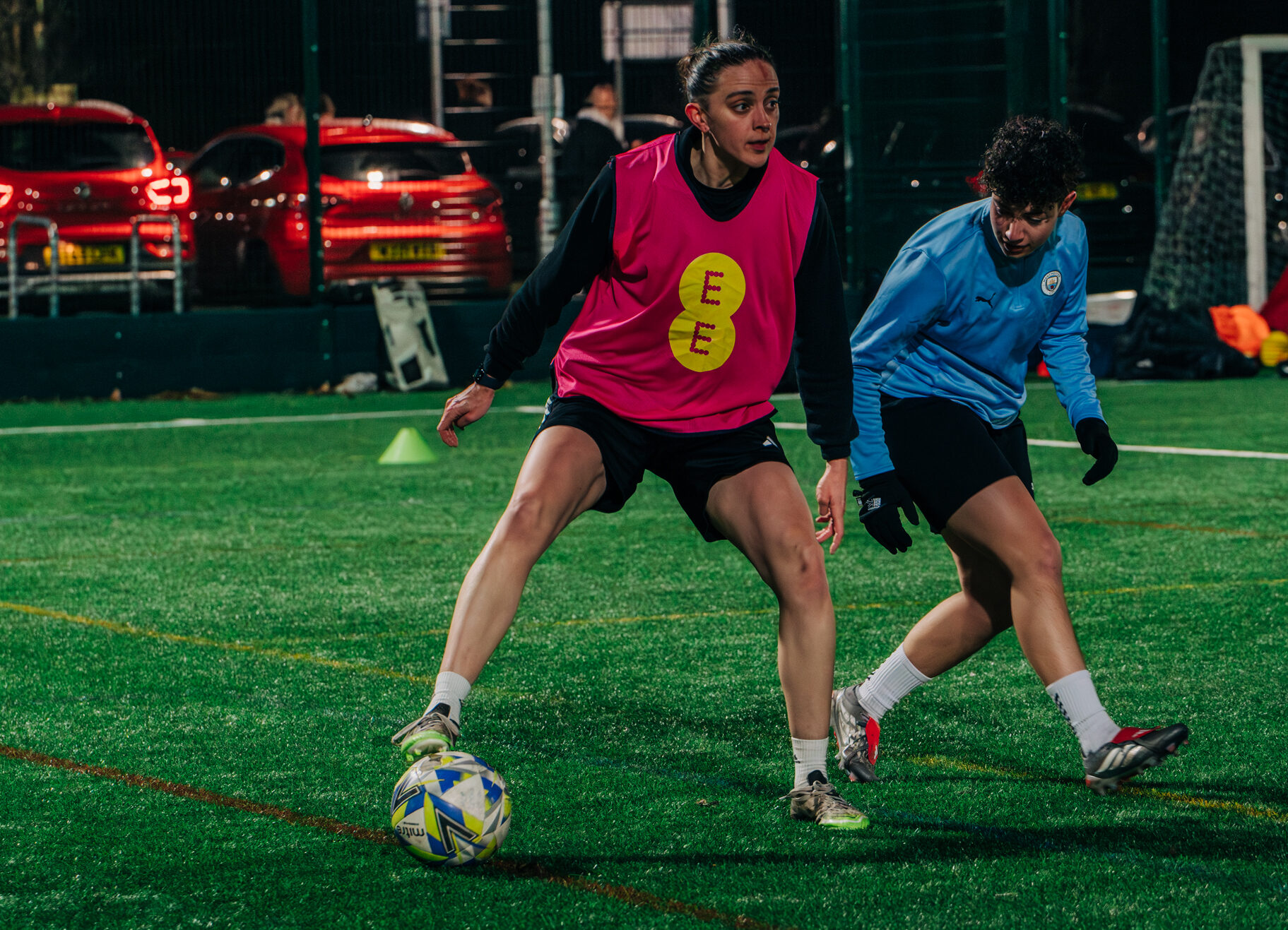
Over the last year, GM Moving and our partners have seen first-hand how the FA’s Empower Her Fund is improving women and girls’ experiences of football and physical activity across Greater Manchester. As we capture learning from Phase One, I want to highlight the impact already emerging.
In a word, the fund has enabled partners to do things differently – with freedom, flexibility, and trust built into the approach.
Partners have created bespoke spaces shaped by the people attending them, rather than starting with fixed programmes or delivery models. The focus has been on building confidence, strengthening connections, and better understanding barriers and enablers to sport and activity.
Manchester & Lancashire County FAs have supported this work alongside StreetGames, Sported and Trafford School Sports Partnership – building delivery confidence and connecting projects into wider local networks. Linking the fund to our GM Place Partnership approach has broadened reach beyond traditional football networks and strengthened sustainability.
This investment is clearly creating ripple effects beyond the funded projects, as we’ve discovered through evaluation interviews. I’ve gathered some reflections on this page, to share the insight we’ve gained so far.
From attendance to community value
Firstly, the funding is changing how programmes are run – women and girls are not only attending sessions, but influencing how they work and who they are for.
For example, at Manchester Laces, Empower Her has supported new community-focused sessions that extend beyond the club’s core offer. This has helped reach women from refugee, asylum-seeker and global majority communities, alongside existing LGBTQ+-inclusive provision.
Starting small, the sessions have grown steadily through word of mouth and participants’ own networks. Consistency and inclusion have built trust and created a regular point of connection.
For some, the offer goes beyond football – building confidence to speak English, sharing cultural experiences such as Ramadan, and feeling recognised and supported.
“Her character’s coming out… she told me I’m the only person she speaks English to. This session is her only chance to speak English with other adults.” [Manchester Laces]
When a participant with a hearing impairment joined, coaches and players adapted communication together, strengthening inclusion and connection.
“You realise how many of your drills are verbal cues… so suddenly you have to think about different ways to communicate.”
The commitment to inclusion extended off the pitch, with the participant using the chat group to share basic sign language and deepen belonging across the group.
Turning ambitions into leadership
Secondly, as confidence has grown, so have ambitions.
Participants are expressing interest in forming teams and playing more regularly, while volunteers are investing in their own development – progressing into formal coaching qualifications. This two-way growth shows the fund’s role in supporting leadership and learning for both participants and those delivering sessions.
“It doesn’t feel like volunteering, it feels like participating. We’re all together as a group of friends rather than leading something.”
Changing places and spaces
We have also seen a shift in how places and spaces are used, with facility provider Leisure United well-placed to ensure activity spaces are inclusive and meet community needs.
In Wigan, the fund enabled community groups to access football facilities free of charge and shape delivery. Women – particularly from South Asian communities – who may not have felt these spaces were for them are now using them regularly for activity and connection, with wider ripple effects such as using facilities for community learning.
“Supporting people to feel safe and creating a sense of belonging in spaces can lead to what is typically a traditional physical activity facility to become a key community asset.” – [James, Leisure United]
By adapting space to cultural needs, co-designing with community members and using relatable role models, these sessions have become a trusted fixture – facilities once perceived as male-dominated and competition-led have become welcoming community assets that build belonging and connection.
With success visible, there is buy-in to keep the space open so sessions can continue, trust can deepen and impact can evolve.
The role of the workforce in supporting and enabling success
What sometimes goes unnoticed, but was often highlighted by grant recipients, is the crucial role of the workforce in enabling and supporting projects to move from ideas to action – providing guidance, joining the dots and upskilling volunteers.
In this work, capacity dedicated through County FA Leads in particular, alongside more localised support, has been vital to project delivery and sustainability.
Importantly, this fund hasn’t only been about project impact – it has also shifted mindsets and ways of working, both organisationally and across the system.
What began as a programme to increase participation has evolved into a more fundamental shift in how sport connects with communities, builds trust, and creates lasting change.
From an FA perspective, the biggest learning has been less about numbers reached and more about how change happens. As one reflection put it:
“it’s not about bringing football to people, it’s about shaping it with them.” [County FA Women’s Community Development Officer]
A defining shift has been recognising that progress moves at the speed of trust. Often, this started simply by “sitting down and having a conversation over a brew.”
Another consistent learning was that who delivers matters as much as what is delivered – engagement increased when delivery and messaging came from people participants could relate to.
This has shifted the governing body role from leading delivery to enabling others. Trusted community connectors became critical: “finding the right person opens doors you didn’t even know were there.”
Recognising that communities hold knowledge the system does not, and leading with humility, was also key: “there are things communities will always see that we won’t, and that has to shape the work.”
One counterintuitive insight was that the strongest projects often started slowly; time spent building relationships, understanding context and planning collaboratively created more sustainable foundations.
This challenged expectations around pace and productivity; early stages can look quiet, but “those early months might look like ‘no update’ but that’s where the real work is happening.”
The message was clear: “it shouldn’t be rushed, getting it right matters more than getting it done quickly.”
Perhaps the most profound shift has been mindset. As one practitioner put it, “if we keep doing things the way we always have, we’ll never open the door to new people.” This has meant embracing a more disruptive role: “you’ve got to go against the grain, otherwise nothing is ever going to change.”
Empower Her Phase One: A story of collaboration, creativity and impact
Together, the early impact of Phase One shows how Empower Her is enabling women, girls and communities to shape football on their own terms.
It has also prompted organisations across Greater Manchester to reflect on how inclusive practice is developed and sustained – and what governance and processes need to shift to better support communities to be active.
Get in touch
“It has been fantastic to see the impact so far, and I look forward to sharing further progress from Phase Two later in the year.” – GM Moving’s Strategic Lead – Sport Partnerships, Holly Grimes.