Introduction
A shared learning approach between Bradford and Greater Manchester is helping practitioners feel more confident supporting children, young people and families to move more, while strengthening collaboration between two place-based approaches.
A new collaboration between Greater Manchester Moving, Bury Council and JU:MP (Join Us: Move, Play), part of the Bradford Place Partnership, has brought together partners with a shared ambition: helping more children, young people and families to enjoy being physically active in ways that work for them and their communities.
The Children and Families Physical Activity Session was developed through JU:MP. The training formed part of JU:MP’s whole-system approach to tackling inequalities in children’s physical activity in Bradford, where research found 77% of children in one disadvantaged area were not active enough. Rather than focusing only on behaviour change, JU:MP explored how communities, environments and local systems can better support families to be active. Research later showed the programme increased children’s physical activity by an average of 70 minutes per week.
As part of the legacy and wider learning from the programme, the Bradford team wanted to explore whether the training could work outside of Bradford for the first time. However, a key principle from the start was that the training should not simply be “rolled out” unchanged. The programme had been designed specifically around Bradford’s context, relationships and communities, and Jan Burkhardt from JU:MP was keen to understand what adapting the approach to a different place and system might look like in practice.
That search for a collaborative test area led to Greater Manchester Moving and Bury Council. As a Place Partnership area with strong existing relationships, whole-system thinking and a shared commitment to place-based approaches, Greater Manchester offered the right conditions to explore how the training could evolve beyond Bradford while remaining grounded in local context and community need.
Why This Collaboration Happened
Across Greater Manchester, 50.1% of children and young people are considered active, while 28.8% are classed as less active — meaning more than 1 in 4 children and young people are not moving enough for good health and wellbeing. While there have been encouraging reductions in inactivity in some of the most deprived communities, inequalities remain significant. At the same time, around half of children and young people report enjoying taking part in sport and physical activity, highlighting both the opportunity and the challenge facing local systems.
Conversations between the Bradford and Greater Manchester teams first began in Summer 2025, with regular meetings since then to shape the training, adapt materials and explore how the learning could be translated into a different place and system.
Bury was selected as the pilot area due to its strong local focus on children and young people within its Place Partnership work for 2025–2028. This focus has been driven by local insight, data and energy from partners across the system, alongside clear alignment between the aims of the training and Bury’s wider theory of change for place-based physical activity work.
For Bury, the pilot provided an opportunity to strengthen existing ambitions around children, young people and families within its Place Partnership work. The training aligned closely with local priorities and offered a chance to learn from Bradford’s experience of developing a whole-system approach to supporting family physical activity.
Lucy Fitzsimon, Neighbourhood Wellness Lead at Bury Council said:
“Bury has a strong commitment to improving physical activity levels among children, young people, and families. We know that supporting families to be active together and embed healthy habits into everyday life brings significant benefits. Hosting the training in Bury has helped us focus on families rather than individuals, helping families to embed physical activity into daily life, making it more achievable, inclusive, and sustainable while improving both health and wellbeing outcomes across generations.
In Bury we have identified gaps in local family support and referral pathways for physical activity. The learning and experiences gained from Bradford’s JU:MP programme will be invaluable in helping us shape our approach, develop effective pathways, and better support families across Bury.”
This reflection highlights the value of looking beyond individual behaviour change and recognising the important role families, communities and local systems play in creating opportunities to be active. It also demonstrates how learning from other places can help accelerate local progress, providing practical insights that can be adapted to meet the needs of Bury’s communities.
Co-Designing the Training Together
Although the training had already been developed and delivered within Bradford, a key principle from the start was that the programme should not simply be transferred unchanged into another area. Instead, the process focused on co-design, adaptation and learning together.
Colleagues from Greater Manchester worked closely with Jan Burkhardt from JU:MP to shape the session so it reflected both the Bury context and wider GM approaches to children and young people’s physical activity.
This included incorporating:
- An increased focus on physical literacy
- The Lundy Model and voice of the child
- Regional messaging around Place-based, whole-system approaches.
One important adaptation to the training was the inclusion of Physical Literacy messaging and reflection. Physical literacy is about our relationship with movement and physical activity throughout life, how we move, connect, think and feel during movement experiences, and how this is shaped over time by individual, social and environmental factors.
We know our own relationships with physical activity inevitably influences how we talk about it with others: how confident and comfortable we feel, the language we use, and the assumptions we may hold about movement and exercise. When working with children and families, understanding these relationships matters even more, as practitioners’ own experiences and attitudes can shape how welcoming, positive and inclusive their approaches feel to others.
Jess Simon’s, Active Children Lead at GM Moving said:
“Being able to incorporate both the new physical literacy consensus and the Lundy model of participation within the training felt particularly important. Having done a lot of work on translating the new physical literacy consensus statement in Greater Manchester, I knew that this concept was crucial for attendees to understand and relate to themselves. It was also a great opportunity for attendees to understand how the Lundy Model of participation is being used across our City-region, ensuring that children and young people’s voices are being used meaningfully to shape and design services and opportunities for them to be active. Both concepts compliment the rest of training by supporting attendees to think about their own role and actions they can take in supporting children, young people and their families to be more active.”
Early impact
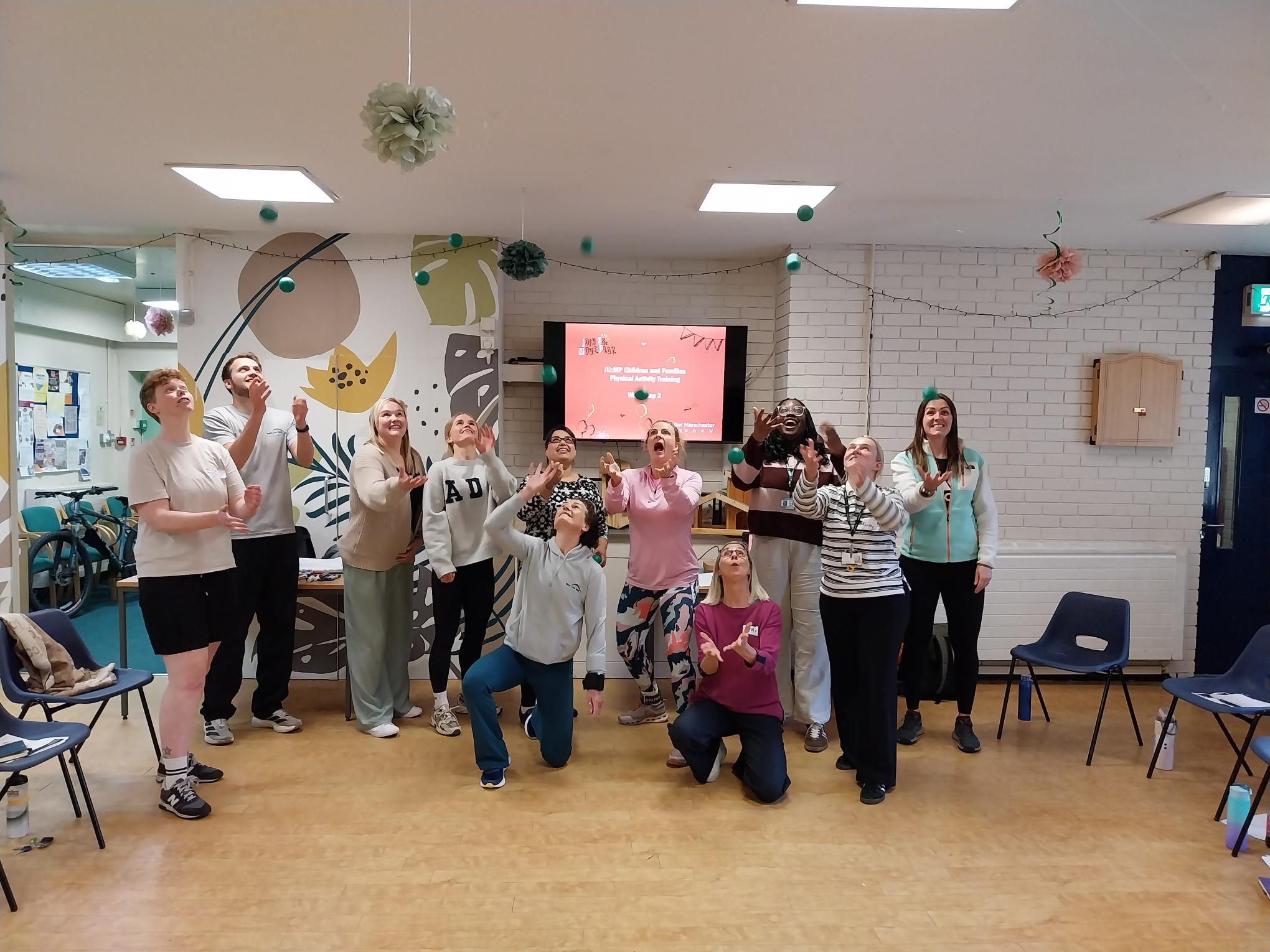
The session brought together eight attendees from four organisations and sectors, including:
- Early years practitioners
- Exercise referral leads
- VCFA/community engagement colleagues
- Place partnership leaders from Kirklees.
Feedback from attendees was overwhelmingly positive, particularly around the interactive nature of the session and the opportunity to connect with people working in different parts of the system
An attendee’s perspective
One participant who particularly benefited from the training was Vivian Kehinde, Children and Young People’s Senior Development Officer at Bury Voluntary, Community and Faith Alliance (VCFA). Coming from a community development rather than a sport or physical activity background, Vivian reflected on how the training helped her think differently about the role movement can play across a wide range of children and young people’s services and activities.
“The training was very enlightening, and I really appreciated the emphasis on movement. While this can include sport, it’s important to recognise that not every child enjoys or connects with traditional sports. For groups that support children and young people outside of sport, there are still valuable opportunities to incorporate movement. For example, we work with some gaming groups, activities like Just Dance or Pokémon Go could be a great way to blend movement with interests they already enjoy. Going forward, regardless of the type of group, I will endeavour to support them in creatively incorporating movement.”
This reflection demonstrates one of the key aims of the training: helping practitioners recognise that supporting children and young people to move more isn’t solely the responsibility of sport and physical activity organisations. By exploring movement through the lens of everyday interests and experiences, participants left with practical ideas they could apply within their own settings and communities.
The pilot also created value beyond Bury. While the original training was developed through Bradford’s JU:MP programme, the process of adapting and delivering it in a new context provided an opportunity for reflection, innovation and mutual learning. The collaboration enabled both places to build on their existing strengths and refine the training approach.
What next?
The impact of the session is already being seen in the conversations and actions emerging afterwards. Discussions with local partners have highlighted how the learning could help shape Bury’s emerging youth social prescribing pathway, while attendees left the session with clear ideas about how they could apply the learning within their own practice.
The next stage of the work for Greater Manchester will include:
- Exploring opportunities for a Train-the-Trainer approach in Greater Manchester
- Supporting local attendees to help cascade the training across Bury and wider Greater Manchester
- Testing the training further with audiences less connected to physical activity to understand its wider system impact.
The Power of working together
Jan Burkhardt, JU:MP Bradford said:
“Our collaboration with GM Moving has updated and improved the course content and reenergised us to continue the delivery across the Bradford District which has been underway for over half a decade. Our journeys as Local Delivery Pilots meant we had a shared understanding about the approach that allowed us to build on our strengths and be creative. There is now potential for JU:MP to share the training more widely once we have tested the train the trainer approach in Yorkshire and Greater Manchester.”
Jan’s reflections highlight the reciprocal nature of the partnership. Rather than simply transferring a programme from one place to another, the collaboration created space to test ideas, strengthen the training content and generate fresh energy for future delivery. It also reinforced the value of creating opportunities for places to learn with and from one another as they work towards similar ambitions for children and young people’s physical activity.
The collaboration between Bradford and Greater Manchester has shown the power of place-based learning when organisations are willing to share openly, adapt together and build relationships across systems. Most importantly, it has created new momentum around a shared goal: helping more children, young people and families enjoy moving more, in ways that reduce inequalities and support healthier, happier communities.
More information
If you are interested in the training please contact Jan Burkhardt: Jan.burkhardt@bthft.nhs.uk
If you are a Greater Manchester organisation looking to find out more about supporting children, young people and families to move more contact Jessica@gmmoving.co.uk
If you want to find out more about place-based approaches to physical activity in Greater Manchester contact Nicole@gmmoving.co.uk.