Earlier this year, Our Goal CIC partnered with Greater Manchester Moving to carry out original research into why teenage girls drop out of physical activity. We ran focus groups with girls aged 13 to 16 in Greater Manchester, using creative methods to draw out their honest responses.
What we found is that girls aren’t dropping out of sport because they don’t want to move. They’re dropping out because of how it feels to be there.
What girls told us – the key points
Across schools and community settings, the same themes surfaced again and again.
Feeling watched is the biggest barrier. Girls described the fear of being judged on ability, on body, on effort, as the thing most likely to put them off. The less on show they feel, the more willing they are to give something a go.
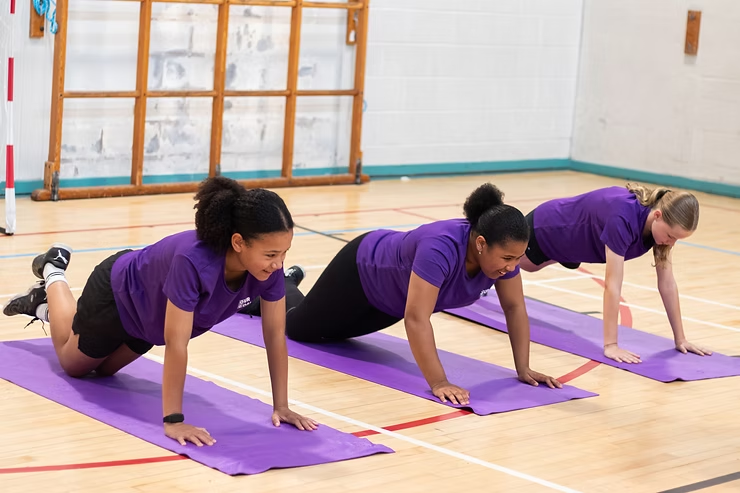
Who’s in the room matters. Smaller groups, girls-only spaces, people they know and trust: all of it lowers the pressure and raises the willingness to try.
They want a say. Even a small choice, a vote on next week’s activity, changes how invested girls feel.
The adult sets the tone. A coach or teacher who responds warmly to a mistake can shift the whole atmosphere of a session.
Practical comfort counts. What girls wear, how much time and privacy they get to change: these small logistics shape how a girl feels before a session has even begun.
And the earlier we reach girls, the better. By their teens, many have already built up years of negative association with organised activity. We need to reach them sooner to help them.
With this in mind, below are some suggestions of how we can help to meet girls needs to keep them active through their teens in PE and the community.
Six things worth trying in PE
-
Create a welcoming atmosphere. A calm start and a culture where mistakes are normal changes everything.
-
Look at your changing arrangements. More time, more privacy. Can we eliminate the need for changing at school altogether by allowing students to come into school in PE kit?
-
Offer some element of choice. It doesn’t need to be full control. Two or three options is enough to help girls feel heard.
-
Think about how you group girls. Let them work with people they’re comfortable with and consider girls-only groupings where possible.
-
Widen the activity menu. Yoga, dance, and other less competitive options alongside sport show girls that PE really is for everyone.
-
Make it easy to share concerns. A named trusted adult or a simple feedback form gives girls a way to speak up.
Six things worth trying in community sessions
-
Let girls have a say. A quick vote or a suggestion box shows their preferences matter and keeps them coming back.
-
Keep groups small and familiar. Trust between participants is one of the strongest predictors of whether a girl returns.
-
Respond warmly when someone struggles. How you react to a mistake changes the culture of a group.
-
Offer a variety of activities. Dance, yoga, and creative movement alongside traditional sport signal that your sessions are genuinely for everyone.
-
Keep it social. Give girls time to chat at your sessions. Overall, social motivations are really high up on the reasons girls do sport.
-
Bring in female role models. You have to see it to be it.
Why this matters
This isn’t a small issue. According to Sport England’s Active Lives survey, only 46% of girls in England are meeting recommended activity levels, compared to 52% of boys, and that gap widens sharply in the teenage years. Unfortunately, the consequences go well beyond fitness. Physical activity has a protective effect against symptoms of depression and anxiety in adolescents, and research consistently links regular movement to stronger self-esteem, better mood, and improved mental wellbeing. When a girl drops out of sport in her teens, she is losing something that could actually protect her health for years to come.
This is exactly why Our Goal exists. Every one of our sessions is delivered in all-female spaces, by young women who’ve been where these girls are. 84% of the girls on our long-term school programmes say sessions improve their mood, and 73% say they feel better about themselves.
We know that there are some things which we can’t change overnight, but we hope this blog provides some ideas for small changes which will make a big difference, whether you’re running a PE lesson or a community session.
This ‘She Belongs Here’ Research was commissioned by Greater Manchester Moving. We’re proud to have been their delivery partner.