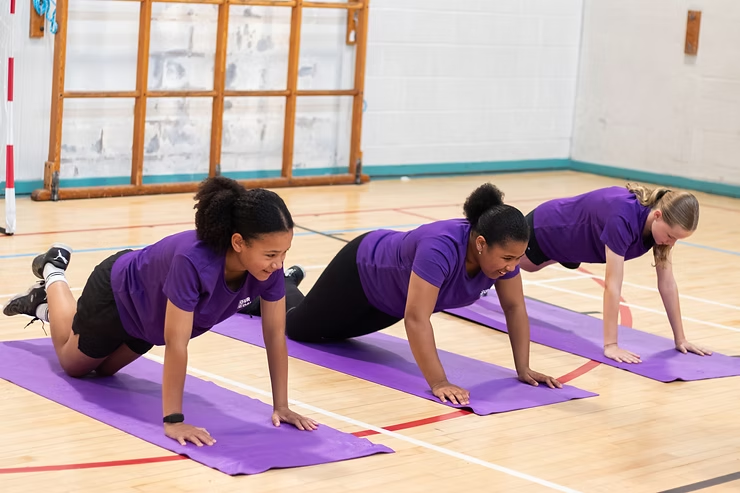
Parkinson’s UK has reopened their popular Physical Activity Grants programme for the sixth successive year.
The grants programme has been supporting local groups, activity providers, sports clubs and many more to deliver more physical activity programmes for people living with Parkinson’s throughout the UK since 2021.
The programme runs until the end of the year, with any groups or providers with a connection to Parkinson’s being eligible to apply for funding from £500 up to £3,000.
In its sixth year, the national grants programme will make some changes to the application criteria with a greater focus on successful applicants being able to support more inactive or lower mobility participants living with Parkinson’s to move more in 2026.
Since its launch in 2021, the Physical Activity Grants programme has gone on to deliver £936,000 in funding for 392 new exercise projects across the UK, ranging in everything from walking football and table tennis to Zumba and assisted rowing, among many others.
It is hoped that even more innovative physical activity projects will be delivered this year to help more people living with Parkinson’s to improve their mobility and wellbeing.
Potential applicants looking for advice or support about the application process can also join the free Meet the Funder webinars from the charity which will be held throughout the year.
How physical activity can support someone to live well with Parkinson’s
Being active can have many physical, mental and social benefits for someone living with Parkinson’s, including:
- Better strength, balance and coordination
- Improved mindfulness and wellbeing
- Reduced risk of falls
- More social interactions
- Improved energy levels
- Better sleep patterns
- Improved cardiovascular health
- Supporting other health conditions
Roma Hashim, Physical Activity Grants Manager at Parkinson’s UK, said:
“We’re incredibly excited to launch this year’s Physical Activity Grants Programme. After seeing the real difference our previous programmes have made in helping people with Parkinson’s to become and stay active, we can’t wait to support even more innovative, community‑led projects.
“Every year we’re inspired by the creativity, commitment and compassion shown by applicants, and we’re looking forward to funding new opportunities that will help people build confidence, move more, and feel connected.”
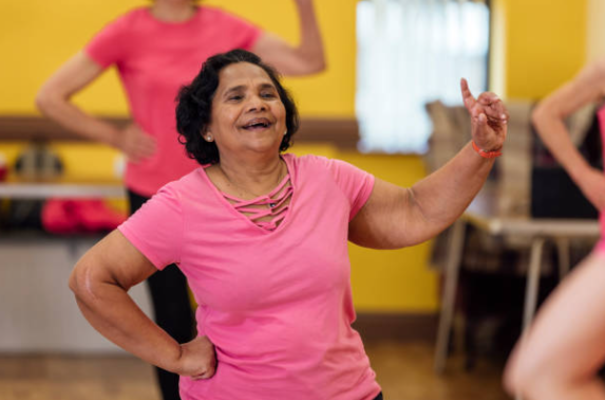
The Afghan and Central Association (ACAA) in Birmingham received funding from the Physical Activity Grants programme in 2025 to deliver innovative new Zumba classes for local people living with Parkinson’s.
Speaking about the impact that a Physical Activity Grant has made, Darius Nasimi, Head of Funding and Partnerships at the ACAA, said:
“The grant funding from Parkinson’s UK has enabled us to expand our work with the Afghan and Central Asian community in the West Midlands.
“The Refugee Women’s Zumba Club is more than a fitness programme – it is a safe, culturally informed space where people can rebuild their confidence, improve their health, and connect with their community.
“The funding has made a real impact and has allowed us to adapt the sessions for different levels of mobility, including those living with Parkinson’s.
“The support from Parkinson’s UK has also allowed us to work more closely with the local Parkinson’s community and the funding means that more local people can now access a fun wellbeing activity.
“I would definitely recommend applying for a Physical Activity Grant if you are looking to support more people with Parkinson’s to live well.”
Parkinson’s is a complex brain condition that gets worse over time. It has more than 40 symptoms, from tremor and pain to anxiety, and there is no cure. Someone is diagnosed with Parkinson’s in the UK every 20 minutes and by 2050, the number of people living with the condition worldwide will double to 25 million.
Parkinson’s UK is the leading European funder of Parkinson’s research and here to support every Parkinson’s journey, every step of the way.
For information and support, visit parkinsons.org.uk or call the charity’s free, confidential helpline on 0808 800 0303.