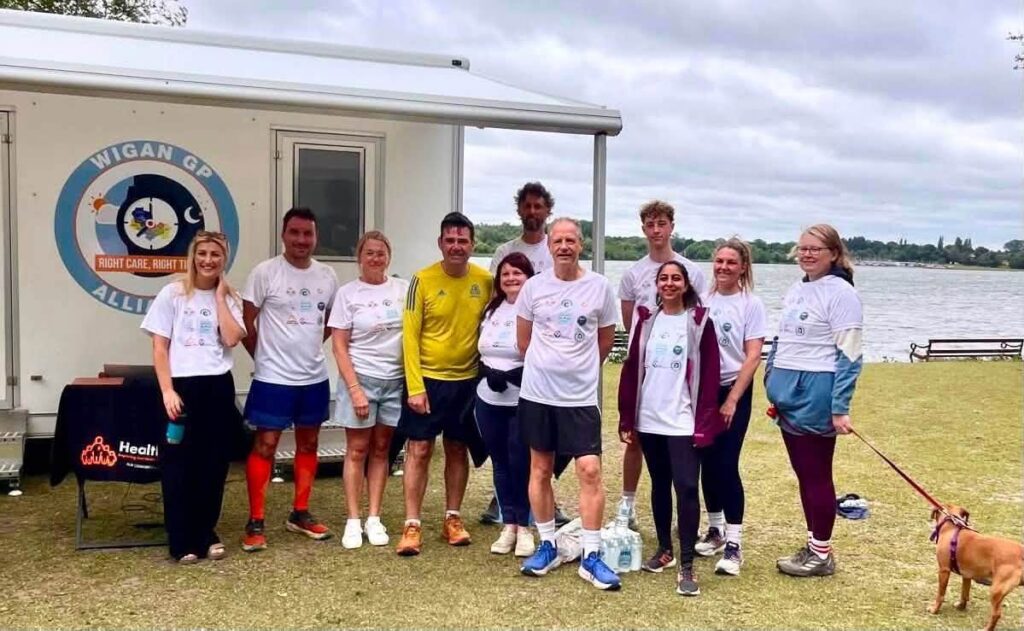
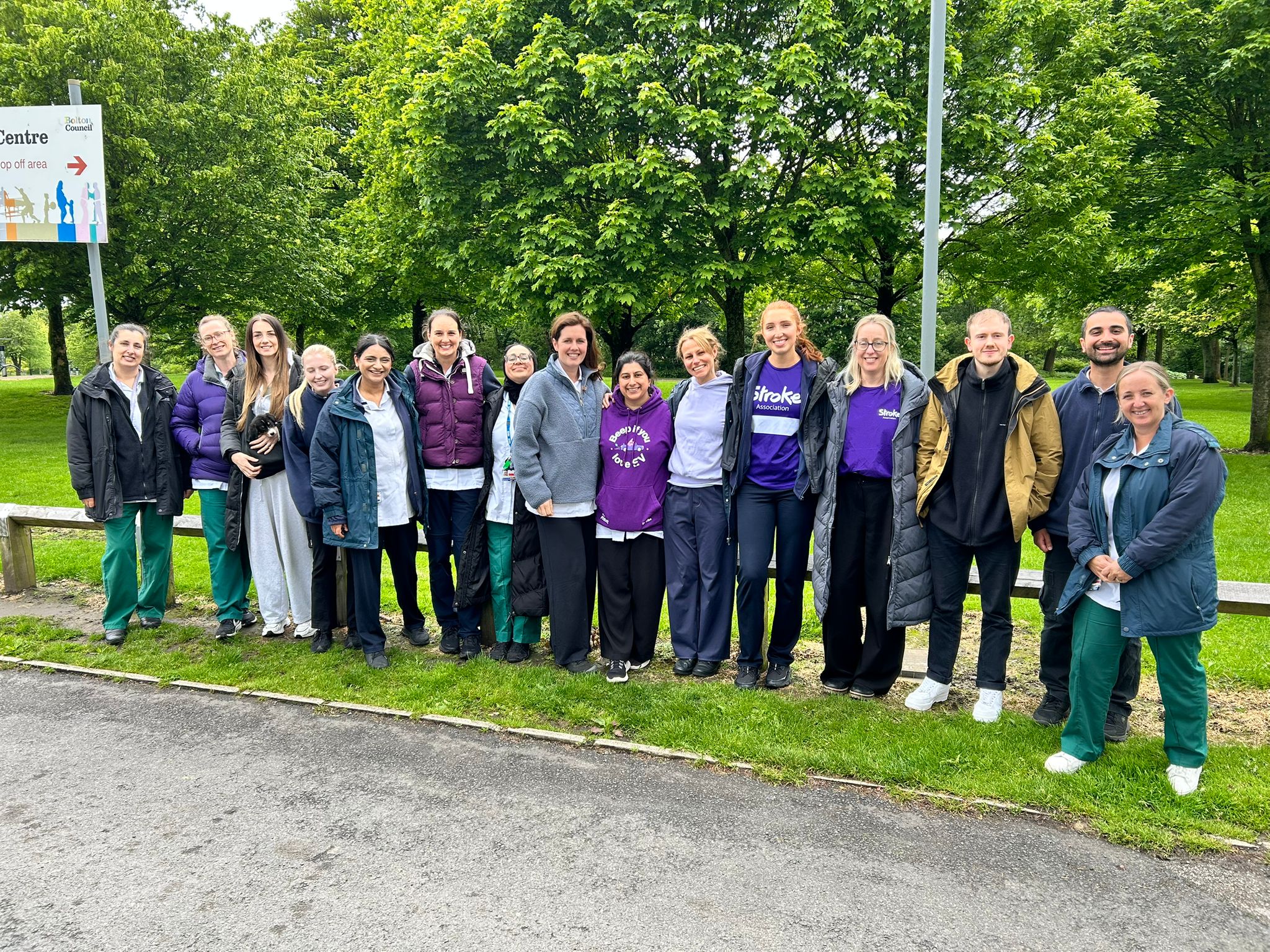
A team at Bolton NHS Foundation Trust have completed a collective 4,500 km of movement in May – one for each person affected by stroke in Greater Manchester.
Neuro-rehab physiotherapist Susan Bannister and her team have been running, walking, cycling, and swimming their kilometres to raise vital funds for Our Bolton NHS Charities.
The money is set to provide essential physical activity and movement resources to empower stroke survivors to live well, improve their wellbeing, and prevent further complications.
Stroke is one of the leading causes of disability in the city-region, and every year around 4,500 people in GM experience a stroke, profoundly impacting their lives and those of their families.
Susan Bannister, Service Lead for Stroke in Bolton, said:
“As a dedicated team working daily with stroke survivors, we understand the challenges they face on the road to recovery.
“Our goal is to raise £1,000 to purchase specialist equipment that will enable more people recovering from strokes to participate safely in physical activity.
“Physical activity plays a crucial role in maintaining health and wellbeing and is especially vital for stroke survivors, promote cardiovascular fitness and aid recovery
“However, engaging in exercise after a stroke can be incredibly difficult without the right support and equipment.”
Find out how you can show your support
The role for movement in health and care
GM Moving are working to embed physical activity into every aspect of healthcare which, as outlined in the NHS Four Ways Forward, will bring benefits to patients and staff.
Our Strategic Lead for Health, Kate Harding, caught up with Susan to find out more about how her fundraising efforts came about and her hopes for stroke patients moving forwards.
Kate: Congratulations on your efforts throughout May, what made you choose physical activity to bring this fundraising campaign to life?
Susan: My challenge was to run every day in May. A stroke patient has that challenge every day – to get up, be active – and I wanted to mirror that challenge. We have got about 35 staff involved, some people walking, cycling, running, which encouraged different people across the team.
Kate: And you’re hoping to use the funds raised to purchase equipment which will help people who have had a stroke to be more physically active, why is that?
Susan: Our aspiration is to buy an assisted exercise bike but even simple things like a set of heart rate monitors would be great so we can check on people from a safety point of view. A bike would be huge asset and could be used as part of a person’s rehabilitation, either as part of a group circuit or for 1-1 sessions, and could be transferred to different people’s bedsides. For people who are in bed or bedside, 15 minutes of pedalling would really help their muscle health.
We have trialled a bike on our unit before and had some very positive outcomes and quickly saw what an advantage it would be. Staff and nursing staff engaged with it and could see benefits.
Kate: How and when did you start using physical activity within stroke recovery?
Susan: We have engaged with cardiorespiratory service development and training sessions with the Greater Manchester Neurorehab and Integrated Stroke Delivery Network (GMNISDN) and GM Active and know that physical activity and exercise that gets your heart and lungs going but it isn’t always a focus for rehabilitation.
It can be a second thought after working on improving strength, balance, co-ordination, speech, cognitive ability etc. Even in the community, progression to being active and sustaining this from cardio-respiratory exercises can be tricky. We’ve been supporting staff to know it can be safe for people who have had a stroke to exercise, and we wanted to give patients the opportunity to do it.
Patients are often keen to get out and exercise but there are accessibility issues. For example, they can’t always get on the exercise bike at the gym due to impairments and it can be difficult to access leisure facilities. It’s partly about letting patients know they can move and be active and about making it accessible to everyone.