
Barriers faced by LGBTQ+ people in physical activity and sport
We highlight the issues LGBTQ+ communities face when trying to get involved in physical activity and sport. We then provide some steps others can take to reduce these barriers and create a more welcoming environment.
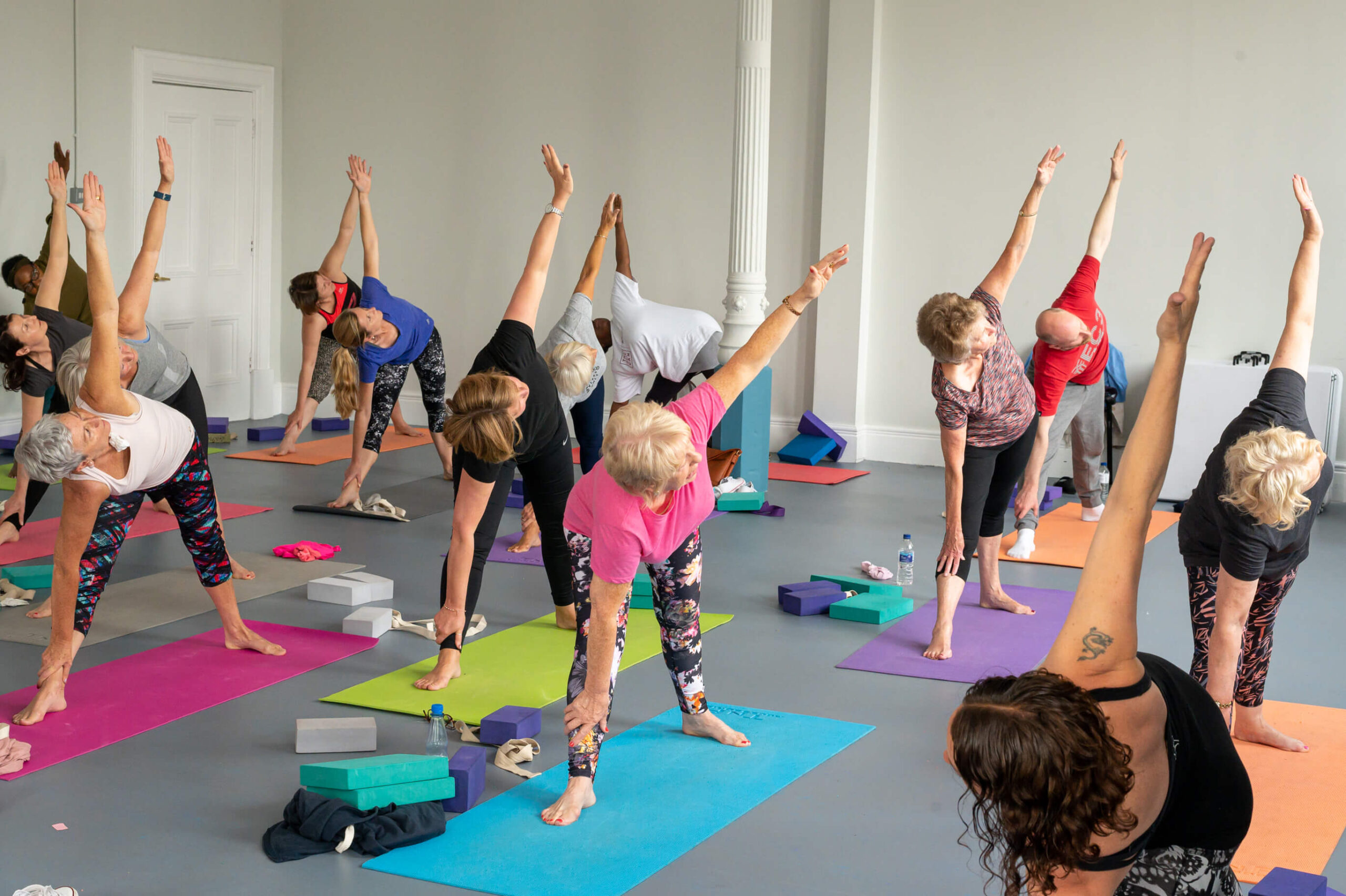
Every step we all take to help marginalised people, including LGBTQ+ communities, to feel more welcome in our spaces helps us on our journey towards a safer, happier and healthier society.
There are fantastic examples of inclusive design from across Greater Manchester. One fantastic example is from Manchester Laces, who recently showed us how football can be truly welcoming and inclusive.
National and local resources
Nationally, Sport England’s Buddle has plenty of tips on how you can make your club more inclusive for LGBTQ+ people.
And there are lots of local LGBTQ+ organisations who can help you learn more about LGBTQ+ people’s experiences and what we can all do to reduce the barriers to physical activity and sport that they face. LGBT Foundation, The Proud Trust, Gendered Intelligence, Mermaids, and Stonewall are some of the major UK LGBTQ+ charities.
To find out what LGBTQ+ sports clubs are near you, check out Pride Sport’s LGBTQ+ Club Finder, or, for more Greater Manchester-specific offers, check out the lists from Canal Street Media and Trans Pride MCR.
Why this matters
Due to their sexual orientation and/or gender identity, LGBTQ+ communities can have a harder time getting and staying active. Barriers to physical activity and sport can be even greater for LGBTQ+ people who are part of more than one marginalised community (also known as having multiple marginalised or intersecting identities), such as being trans and disabled.
There’s limited research into LGBTQ+ people’s experiences of movement, physical activity, and sport. The amount of research is even lower for trans, non-binary and other LGBTQ+ people who have multiple marginalised identities.
This means we don’t yet have a full picture of the challenges LGBTQ+ people encounter, but the studies that exist paint a worrying picture. Conversations we’ve had with LGBTQ+ people in Greater Manchester have told us more about the shared barriers they face.
To make sure that everyone can lead a more active life, we need to better understand the barriers that people face when trying to get and stay active.
As part of our role to tackle inequalities and create the conditions for active lives for all, we’ve outlined the challenges and barriers LGBTQ+ communities face below. To support you to play your role, there’s also actions you can take to support LGBTQ+ people who want to move more.
Explore the research that shows LGBTQ+ people have a tougher time getting and staying active
LGBTQ+ inclusion tips
LGBTQ+ inclusion can be complex, as the community is made up of millions of unique individuals. We can all play our role. By applying any, even just one, of the tips below, you can make a big difference and create a more inclusive environment.
If you’re unsure of any terms we’ve used on this page, and would like to know their definition, please visit Stonewall’s list of terms.
Anti-LGBTQ+ prejudice
-
Barriers
Homophobia and anti-LGBTQ+ attitudes continue to be a serious problem in physical activity and sport. These attitudes create significant barriers, preventing many LGBTQ+ people from taking part, feeling welcome, and enjoying being active.
A 2022 study of online abuse showed that 90% of tweets to women’s footballers had sexist and/or homophobic content. 1 in 4 LGBTQ+ people don’t feel welcome in community sport groups or teams. With transphobia (anti-trans prejudice) on the rise in the UK , it’s likely becoming harder for trans and non-binary people to exercise without facing hate, prejudice and discrimination.
Prejudice isn’t always easy to spot. Sometimes, assumptions and hostile attitudes are smaller and less obvious, but still have a significant effect on people.
One example of less obvious behaviours are microaggressions. Microaggressions are comments or actions that subtly and often unconsciously or unintentionally express a prejudiced attitude toward a member of a marginalised group. For example, assuming that someone’s partner is a different gender to them, or stereotypes like ‘gay men are too girly to be good at sport’. You can learn more about LGBTQ+ microaggressions from the Royal Pharmaceutical Society. Microaggressions can be a barrier that stops LGBTQ+ people from getting and staying involved in sport, physical activity and movement. Although they might not seem as significant as more obvious forms of homophobia or transphobia, microaggressions can make LGBTQ+ people feel like they don’t belong in a space, making them less likely to participate or join in next time.
In England, many people were never given the opportunity to learn more about LGBTQ+ people and their experiences. For people who went to school in the UK between 1988-2003, Section[JE6.1][EW6.2] 28 (Local Government Act 1988) made it illegal for teachers to teach about LGBTQ+ communities. A lack of representation of LGBTQ+ people, stories, and experiences in the news and media limits the amount of public understanding and awareness of these communities. This lack of education and awareness of LGBTQ+ experiences have led to sport, physical activity, and movement spaces that are not designed in a welcoming and inclusive way for these communities. It’s also meant that prejudiced or negative beliefs about LGBTQ+ communities are more prevalent, which makes discrimination more likely.
-
Solutions
We can unlearn our prejudices and improve our allyship through taking part in LGBTQ+ awareness training, which is offered by LGBT Foundation and the Proud Trust in Greater Manchester.
If you have LGBTQ+ friends or family, ask to speak to them about their experiences. Here, you can find out the challenges they face and what’s worked well to support them feeling safe and welcome in a space. Before having these conversations, make sure the LGBTQ+ person you’re speaking to is comfortable sharing their experiences with you. Try to not demand answers, instead, create a space where people feel able to share what they want to with you.
If you don’t have any friends or family who are LGBTQ+, there are plenty of other ways to find out about LGBTQ+ people’s experiences. Watching TV programmes, reading books, seeing films and listening to podcasts by and/or about LGBTQ+ people can be fun, quick, cheap, and easy ways to learn more about LGBTQ+ communities.
A powerful way to tackle anti-LGBTQ+ prejudice is challenging it when it happens. You can feel more comfortable and confident doing this through attending an Active Bystander training course, which GM Moving regularly offer free of charge.
Organisational policies and procedures can play a role too, by supporting people when they challenge anti-LGBTQ+ prejudice, protecting staff and participants. Organisations can do this by creating a publicly available Zero Tolerance Policy for discriminatory behaviour, and clear public guidance on how your club or organisation will respond to discrimination. See LGBT Foundation’s guide on trans inclusion in sport, exercise and movement for examples on how to write these policies.
Gendering in sport
-
Barriers
Many sports are still stereotypically seen as for men/boys or women/girls, and who feels welcome often depends on how people look or behave in these gendered spaces. This can particularly exclude LGBTQ+ people who may not look or act how we expect boys, girls, men, or women to. Take a netball team as an example: Many people picture a group of feminine women wearing skirts or dresses. A masculine-presenting lesbian might stand out, feeling different and out of place. This sense of not fitting in can discourage LGBTQ+ people from taking part in certain sports.
Separate gender categories for competition can also prevent trans and non-binary people from being able to compete in a growing number of sports. In May 2025, the FA banned trans women from competing in women’s football at all levels, grassroots to elite . While some sports have encouraged trans women to play in men’s teams, the strong culture of toxic masculinity in many of these environments can make women, including trans women, feel unwelcome and unsafe . As a result, trans women may feel they have no space to play the sports that have banned their participation in women’s categories.
In competitive sport, some players are concerned about potential unfairness caused by a trans person joining in. Grassroots sport is where most of us play, and although competition is part of the fun, ensuring everyone can join in and enjoy themselves should be the focus.
-
Solutions
Consider how your club or organisation can adapt what you expect people to wear to the sport or activity, so that more people feel comfortable and welcome taking part. London Mavericks, a Netball Super League club, provide a great example of inclusivity. As of 2025, players can choose to wear shorts, skorts, leggings, and longer vests, in addition to the traditional dress11. LGBT Foundation’s guide12 also talks about the importance of clear dress expectations to support the inclusion of trans communities. This is particularly the case for activities like swimming where men are expected to wear trunks and be topless – which may not be appropriate for a trans man if he’s not had top surgery. Clear, visible, and inclusive clothing expectations can help everybody to feel more comfortable and confident trying a new activity. Consider how your club or organisation can adapt what you expect people to wear to the sport or activity, so that more people feel comfortable and welcome taking part. London Mavericks, a Netball Super League club, provide a great example of inclusivity. As of 2025, players can choose to wear shorts, skorts, leggings, and longer vests, in addition to the traditional dress. LGBT Foundation’s guide also talks about the importance of clear dress expectations to support the inclusion of trans communities. This is particularly the case for activities like swimming where men are expected to wear trunks and be topless – which may not be appropriate for a trans man if he’s not had top surgery. Clear, visible, and inclusive clothing expectations can help everybody to feel more comfortable and confident trying a new activity.
In terms of fairness, there are lots of reasons why someone may be better at a sport than another person. Some players have played for a longer time or had access to better equipment and coaches. Perhaps their ability to take part hasn’t been limited by racism, ableism, sexism, classism, fatphobia, homophobia, or other prejudices.
Therefore, when we state that one person must be better at a sport purely because of their sex, we’re taking a limited view on fairness. This limited view ignores many other factors that cause differences in ability.
With this in mind, when we have conversations about trans inclusion in sport, we need to consider the bigger picture. What other factors that cause unfairness are going under the radar in that sport or league? And what can your colleagues or teams do to promote inclusion and fairness for all, considering this?
If your sport’s National Governing Body currently restricts the participation of trans people, you can still help create inclusive opportunities. This might involve working with local clubs, leagues, or community partners to pilot inclusive formats, or establishing friendly or recreational teams where trans and non-binary participants are explicitly welcomed. These spaces can complement existing pathways and provide evidence and experience that support more inclusive approaches in the future.
For example, Manchester offers several small- and full-sided leagues where cis and trans women, non-binary people, and trans men all play together. These leagues show how welcoming and diverse environments can thrive while offering competitive football . Manchester Roller Derby also pride themselves on having inclusion and welcoming all people at the heart of the work they do. Learn more about the work of Manchester Roller Derby here.
Gendered Facilities
-
Barriers
Recent changes to the Equality Act 2010’s definition of ‘Sex’ (following the Supreme Court ruling in April 2025), will likely make it more difficult for trans people to access gendered toilets and facilities, creating a significant barrier for getting involved in certain sports and physical activities.
An interpretation of the changes to the Equality Act 2010 requires people to use the gendered facilities that align with their sex assigned at birth. For trans men, this would mean using women’s facilities. However, many trans men would probably not be welcome in women’s-only spaces, particularly if their appearance looks more masculine following gender affirming care. As a result, trans people may not feel welcome or able to use men’s or women’s toilets or changing rooms, meaning they can’t access certain sports or physical activities .
More masculine presenting cisgender, queer women have also shared negative experiences when trying to use women’s facilities. These women might not fit stereotypes of what a woman should look like, this makes them more vulnerable to harassment when using women’s facilities. Black women are also more likely to face this policing than white women due to not fitting society’s white-centric ideas of what a woman should look. -
Solutions
Where possible, having accessible, gender-neutral facilities can be a great way to make sure everyone has a space to get changed and use the bathroom. The EHRC will soon publish guidance on how to make these facilities legally compliant.
It’s important to have a publicly available code of conduct and a zero-tolerance policy on discrimination. These policies should make it clear that discrimination isn’t welcome in your spaces and the processes that will be followed if someone is accused of discriminatory behaviour. Relevant staff should receive training on conflict management and dealing with complaints about discrimination, this training will help to protect all involved.
If your buildings or funding means creating gender-neutral facilities isn’t an option, think about how to be more inclusive with the gender segregated facilities you have. For example, Broughton Leisure Centre caters for a large Jewish population, many of whom require single sex facilities. During specific times each week, the centre, including the pool, gym and classes, are either male or female only. Outside of these times, all facilities are mixed sex, including changing rooms and bathrooms.
Other simple steps can be taken to promote inclusion by helping potential service users to understand what you offer and how you can tailor that offer to their needs. For example, having detailed descriptions of your facilities, offering tours with staff, hosting trans specific sessions, and highlighting when quite times of day are.
For more advice on promoting inclusion when you have gendered facilities, see LGBT Foundation’s guide (p.29-32).
Representation
-
Barriers
In some sports, there are very few, or no, openly LGBTQ+ athletes taking part. This lack of representation can lead LGBTQ+ people to believe they don’t belong or won’t be safe if being open about their identity and taking part in these sports. This problem can also be worsened when athletes do share their LGBTQ+ identity and face huge amounts of abuse as a result. Josh Cavallo, who recently was the only openly gay top-flight male professional footballer in the world, has shared his experience of receiving daily abusive messages on his social media due to his sexuality.
Some people will use the lack of openly LGBTQ+ athletes taking part in their sport as a reason not to support actions to promote LGBTQ+ inclusion in their sport. 3.2% of adults in England & Wales are LGB+. This number is likely to rise with 16–24-year-olds twice as likely to identify as LGB+ than the overall population showing that a more accepting culture for LGBTQ+ people is leading to more young people embracing and sharing their LGBTQ+ identities.
These stats mean that it’s highly unlikely that there are genuinely no LGBTQ+ professional men’s footballers, for example, and that the lack of representation suggests LGBTQ+ men in football are afraid of being public about their identity. Because of this, a lack of LGBTQ+ representation in a sport should be used as a motivator to take urgent action to support LGBTQ+ inclusion.
-
Solutions
If you have openly LGBTQ+ people in your club or group, have open and honest conversations with them about their experiences in your space. Find out what’s going well, for example, ask what encouraged them to share their LGBTQ+ identity with their team members? Also ask what could improve, for example, have they faced any microaggressions or homophobia whilst playing for your club? From these conversations, make sure you’re keeping up and growing the good stuff and taking regular action to reduce what’s going wrong. When we see people like us taking part in an activity, having fun and being safe, we’re more likely to try that activity out ourselves. That’s why it’s important to support your current LGBTQ+ members.
Remember that the LGBTQ+ people at your club aren’t representative of the whole community, and promoting LGBTQ+ inclusion shouldn’t be placed solely on LGBTQ+ people. Speak to a wide range of people, and make sure allies and LGBTQ+ people are responsible for putting recommendations into practice.
If you don’t have many or any LGBTQ+ people in your club/group, it’s still important to publicise yourself as a welcoming space for LGBTQ+ people and take action to make sure that LGBTQ+ who do join are genuinely safe and welcome.
This might include: celebrate your local Pride events; with their consent, share images of your LGBTQ+ players on your social media or website; policies that protect LGBTQ+ people from discrimination.You should also work to ensure: there’s a culture where LGBTQ+ prejudice is challenged; and education for yourself and others in your club/group on LGBTQ+ communities, the discrimination they face, and what we can all do to promote their inclusion.
Previous experiences
-
Barriers
The barriers shared in this article are some of the several factors that mean many LGBTQ+ people have had bad experiences when taking part in physical activity and sport. Fear that these experiences might happen again, often stops LGBTQ+ people from wanting to try joining new gyms, walking groups, or sports teams. LGBT Foundation’s research showed that 75% of trans and non-binary people avoided physical activity and sport completely due to the fear of discrimination.
-
Solutions
It’s important to let LGBTQ+ people know that you’ve put effort into making your team, group or space is welcoming and safe. This could be through celebrating key LGBTQ+ events, like Pride, on your social media accounts, or having visible LGBTQ+ pride flags in your venues. When someone new joins, try introducing yourself using your name and pronouns and avoid making assumptions around someone’s identity, for example, what gender their partner might be. Encourage those around you to make extra effort in making someone feel welcome, bearing in mind that past negative experiences may make joining your team a more nerve-wracking experience than non-LGBTQ+ people may find it.
Don’t be afraid to get things wrong – it’s much easier to be someone who’s good at being corrected and apologising than it is to be perfect. Everyone makes mistakes, allyship is a learning journey and intent plus a continued commitment to positive action is more important than being perfect 100% of the time.
Intersectionality/multiple marginalised identities
-
Barriers
For many LGBTQ+ people, being LGBTQ+ is only one part of their identity and experience. There are plenty of Black lesbian women, disabled trans men, or working-class bisexual people. People’s experiences of the world and the prejudice they face is shaped by their multiple intersecting identities, a theory known as intersectionality.
This means that many spaces designed for LGBTQ+ people aren’t inclusive and welcoming to all LGBTQ+ people. For example, Queer, Trans & Intersex People of Colour (QTIPoC) have shared the experiences of racism and racial prejudice they’ve faced in Manchester’s Gay Village.
The intersection of age and LGBTQ+ identity can also create unique barriers to getting and staying active. For example, a report into older LGBTQ+ persons’ experiences of physical activity and sport in Greater Manchester showed that this group face homo/transphobia plus barriers due to their age and ability meaning they’re not seen as athletes, so are made to feel unwelcome in certain physical activity spaces.
Another example is the intersection between neurodiverse and trans communities. Trans and non-binary people are between 3-6 times more likely to be autistic or neurodivergent. For these people, they have to work around barriers caused by transphobia and trans exclusion policies plus barriers from spaces not designed with neurodiversity in mind. For example, autistic people can face barriers to physical activity including sensory sensitivities, social expectations, and lack of awareness of autism amongst staff, coaches and players.
-
Solutions
It’s important to remember that our experiences are shaped by our multiple intersecting identities. So, although putting to place the suggestions in this article is a good first step in better supporting LGBTQ+ communities, it’s not the full story. Take time to learn more about and support disabled people (see Activity Alliance and Beyond Empower), people from the global majority (see Sporting Equals), working class communities (see Resolve Poverty), and so on.
There are simple steps you can get started with. If you’re speaking to LGBTQ+ people about how to better improve your services, make sure this group is diverse – not just the 3 LGBTQ+ teammates you have. Protect all people from hate and discrimination through zero tolerance policies around discrimination to everyone, not just LGBTQ+ communities.
-
Sources and cited research
http://sportengland.org/research-and-data/research/lgbtq?section=research-section
https://lgbt.foundation/wp-content/uploads/2025/09/Trans-and-Non-Binary-Inclusion-in-Sports-Movement-and-Exercise.pdf
https://lgbt.foundation/wp-content/uploads/2025/10/Trans-and-Non-Binary-Inclusion-in-Sports-Movement-and-Exercise.pdf
https://www.footballvhomophobia.com/lgbtphobia/
https://churchcourtchambers.co.uk/article/silencing-homophobia-in-sport-are-clubs-doing-enough-to-tackle-online-hate/
https://www.bbc.co.uk/sport/football/61912426
https://www.stonewall.org.uk/news/new-research-shows-many-lgbtq-people-still-dont-feel-welcome-in-sport-as-rainbow-laces-kicks-off
https://www.stonewall.org.uk/news/new-data-rise-hate-crime-against-lgbtq-people-continues-stonewall-slams-uk-gov-
https://www.rcn.org.uk/About-us/Equity-diversity-and-inclusion/Taking-time-to-talk/Important-concepts-to-understand/Microaggressions
https://www.thefa.com/news/2025/may/01/fa-transgender-policy-update-statement-supreme-court-ruling-20250105
https://www.theguardian.com/football/2023/jun/01/patrice-evra-toxic-masculinity-in-mens-football-abuse
https://www.birmingham.ac.uk/research/perspective/football-social-responsibility-misogyny https://www.theguardian.com/sport/2018/jun/22/football-clubs-can-end-toxic-masculinity-but-first-they-need-to-talk-about-it
https://www.bbc.co.uk/sport/netball/articles/c629pl7l0qdo
https://lgbt.foundation/wp-content/uploads/2025/10/Trans-and-Non-Binary-Inclusion-in-Sports-Movement-and-Exercise.pdf
https://inclusivefootballcollective.co.uk/ https://www.instagram.com/theafleague/?hl=en-gb
https://www.equalityhumanrights.com/our-work/uk-supreme-court-ruling-meaning-sex-equality-act-our-work
https://lgbt.foundation/wp-content/uploads/2025/10/Trans-and-Non-Binary-Inclusion-in-Sports-Movement-and-Exercise.pdf
https://diva-magazine.com/2021/01/19/news-butch-lesbians-are-facing-increasing-harassment-in-public-toilets/
https://pmc.ncbi.nlm.nih.gov/articles/PMC4606888/
https://www.equalityhumanrights.com/our-work/uk-supreme-court-ruling-meaning-sex-equality-act-our-work
https://www.bbc.co.uk/sport/football/articles/cvgn0411vlvo
https://www.ons.gov.uk/peoplepopulationandcommunity/culturalidentity/sexuality/bulletins/sexualorientationenglandandwales/census2021
https://www.theguardian.com/society/2023/jan/25/young-people-england-wales-twice-likely-identify-lgb-overall-population
https://lgbt.foundation/wp-content/uploads/2025/10/Trans-and-Non-Binary-Inclusion-in-Sports-Movement-and-Exercise.pdf
https://www.law.columbia.edu/news/archive/kimberle-crenshaw-intersectionality-more-two-decades-later
https://www.vice.com/en/article/manchester-lgbtq-racism/
https://www.gmmoving.co.uk/media/5766/staying-alive-older-lgbtqplus-engagement-in-physical-activity-in-greater-manchester.pdf
https://www.cam.ac.uk/research/news/transgender-and-gender-diverse-individuals-are-more-likely-to-be-autistic-and-report-higher-autistic
https://www.durham.ac.uk/news-events/latest-news/2025/08/rethinking-autism-and-exercise-new-study-challenges-old-assumptions–/