MileShyClub believe everyone deserves the chance to feel healthier, happier and more confident. We’re a registered charity dedicated to helping people become more active in order to improve both their mental and physical wellbeing through our running clubs, walking clubs and mental health support groups.
We recently started delivering new Couch to 5k sessions, to bring physical activity to people seeking asylum. When we first started delivering the sessions inside a migrant hotel, we knew this wouldn’t be a “standard” Couch to 5k project.
At its core, this project was about meeting people where they are – and staying true to our belief that no one gets left behind.
Programme aims
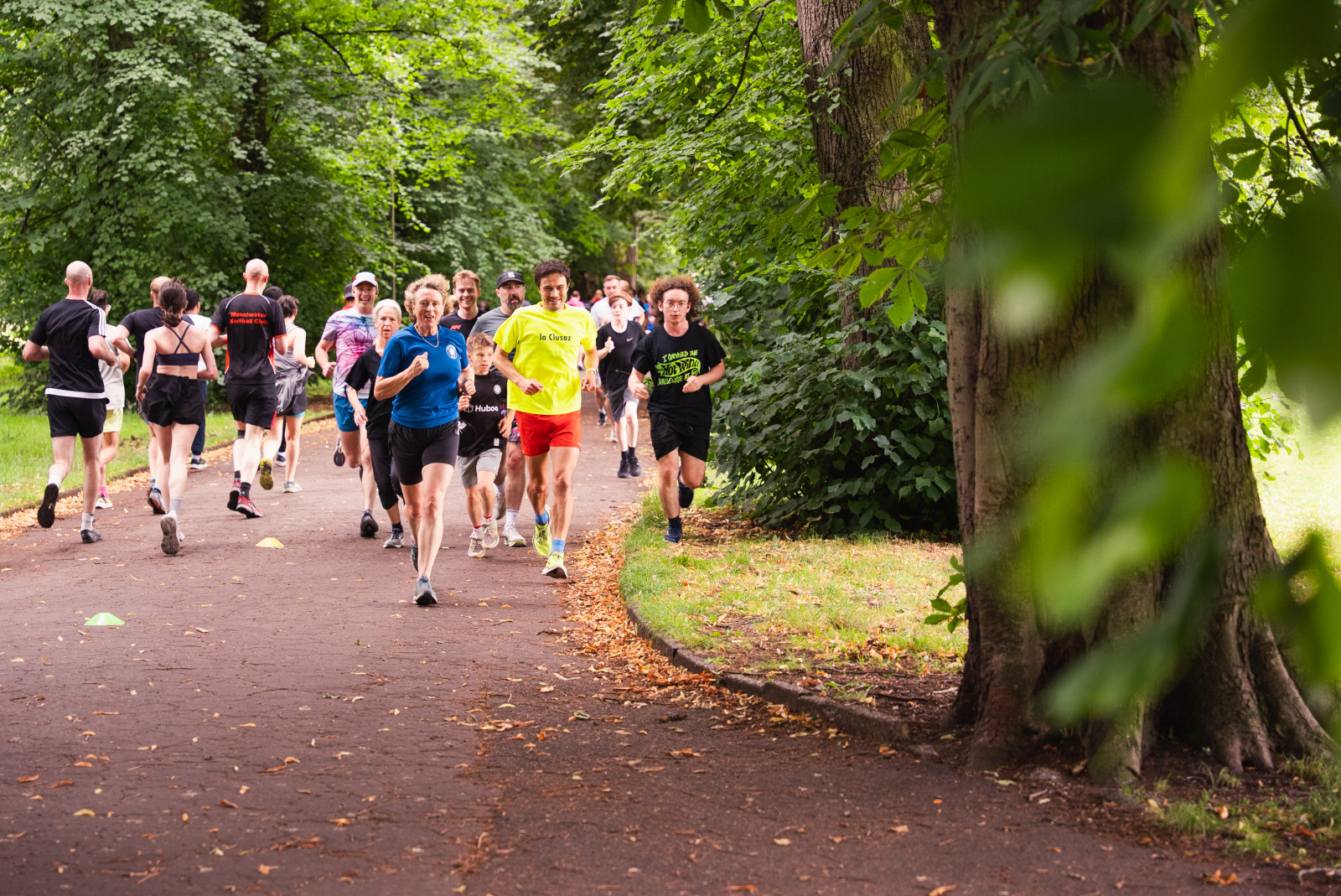
Our ultimate goal was to support participants to complete a 5k at parkrun alongside our wider MileShy community.
This was a significant ask. It would require people to leave their hotel, trust us to support them, and take part in a busy public event.
Understanding participant’s needs
Before we even thought about running, we focused on getting to know the men. We visited the hotel ahead of delivery to meet residents, understand the indoor space and get a feel for what might work. This helped us understand potential barriers to activity, which we could design our sessions around.
Barriers to activity
Many of the men we were working with had experienced significant trauma, uncertainty and long periods of inactivity. Trust was low, routines were non-existent, and the environment itself wasn’t designed for physical activity. The men couldn’t use the local park to play football due to some local opposition, and the only activity available at the hotel was English-speaking classes.
One of the first men we spoke to told us he couldn’t exercise due to a heart condition. After spending more time with him, it became clear he had no underlying heart issues but was experiencing panic attacks. This was linked to fear of leaving the hotel, following significant protests at the hotel just a few months before we began.
One of the biggest practical challenges was footwear. Most men only had government-issued flip flops, which weren’t suitable for exercise. We sourced trainers and running gear through Sal’s Shoes, other local organisations, and individuals.
We funded the project ourselves. Coaching time was delivered on a voluntary basis. We invested in weekly promotional materials within the hotel and during Ramadan we offered dates to runners who were fasting.
Designing the sessions for success
- Sessions were mostly indoors, designed to be simple, welcoming, and barrier-free.
- Music set a positive mood, and we relied on body language to guide movements for men still learning English.
- Over time, we introduced counting, muscle names, and simple instructions to support both running and language learning.
- Building trust was central; we worked closely with Trafford Community Collective volunteers and local organisations supporting people seeking asylum.
- From the start, we were careful with language, choosing “people seeking asylum” instead of labels.
- We had planned to travel by tram to encourage independence but drove instead to make sessions easier to join, with volunteers on standby for high turnout.
One of the men shared in the car on the way to parkrun that he had spent seven months as a political prisoner in East Africa and hadn’t seen his family for two years. On the journey home from parkrun, we asked if he planned to rest during fasting, like others. He replied, “no, I’m just too happy.”
What we have learned from this work
Projects like this rely heavily on the right people. Flexibility is essential – plans change quickly, whether that’s session times, locations or delivery style.
In this project, the men didn’t only want running – they wanted football, gym work and strength training too. They knew the benefits of physical activity and want to enjoy it more often. We must think beyond the physical activity itself, and consider, ‘what else will encourage people to join in?’
Attendance varied from 8 to 30, as men moved on just as relationships were forming. The Couch to 5k app let them continue running wherever they were relocated, and some even tackled “homework” runs together in small groups. We were surprised to find a few were already strong runners, including one who had represented Ethiopia nationally. Towards the end, Ramadan changed routines, so we offered morning sessions for non-fasters, and evening sessions for those observing.
The final challenge was deciding whether to share the project publicly. Doing so carries risks, including potential backlash and the possibility of alienating some of our existing community. However, given the positive impact and the wider importance of community cohesion, we felt it was a considered and necessary step.
For this project, we wanted to see what was possible with limited resources, responding to an immediate need. One area we would strengthen in future work is collecting data and measuring impact. While we captured stories, photos and videos, more structured data would require dedicated resource on-site.
Quote from our partner: Trafford Community Collective
‘Jane’s belief that ‘no one should get left behind’ informs all of her engagement with people, regardless of who they are or where they are from. The men seeking asylum are no exception to this. It was wonderful to see them engage and enjoy themselves, whether they were professional sportsmen or casual runners. Trafford Community Collective are proud to stand with the Mile Shy Club in support of all people living in community.’
Further information
Discover MileShyClub, making exercise affordable, accessible, inclusive and fun in Greater Manchester.
Learn how partners are creating the conditions for active adults in everyday life, designing activity into everyday habits, routines and spaces.