
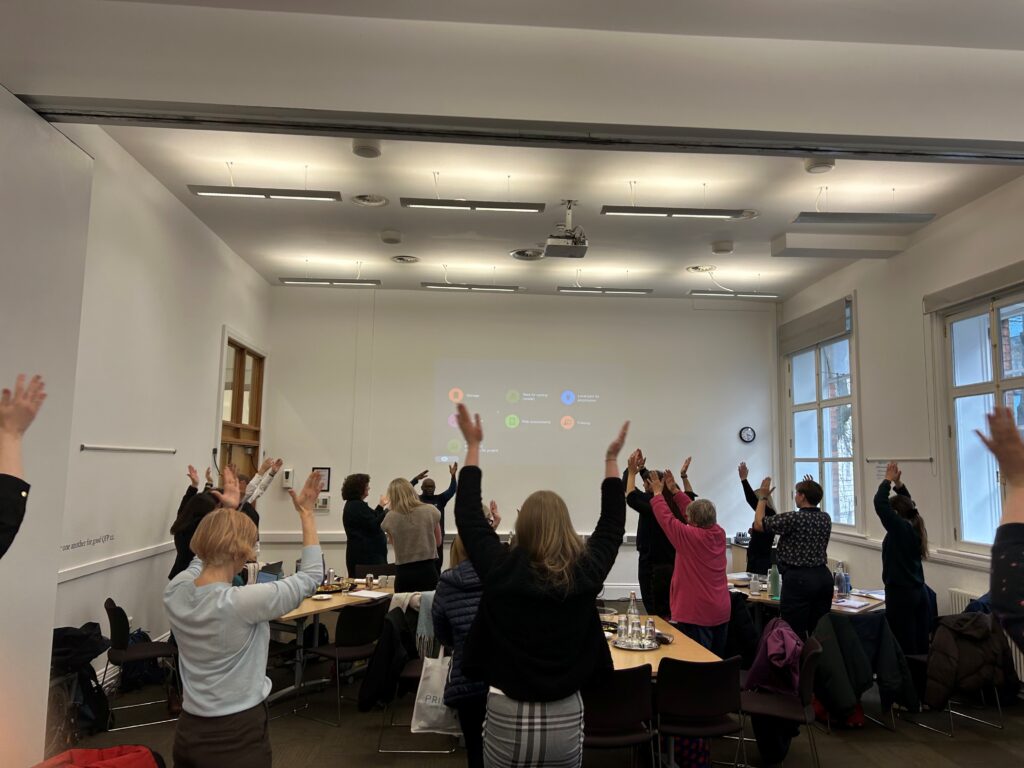
In early February 2026, GM Moving delivered the first in a series of shared learning events, exploring the potential of using physical activity and movement in social care prevention.
Working in partnership with system change consultancy Noisy Cricket, GM Moving invited people and organisations already making inroads in this space through the delivery of person-centred care. Together, explored how important enabling the social care workforce is when centring the needs of residents and patients to achieve independence, dignity and a greater sense of wellbeing.
Hosted by GM Moving’s Beth Sutcliffe and Kate Harding, and led by Noisy Cricket’s Lauren Coulman, the event invited opening comments from Tameside Council’s Assistant Director for All Age Commissioning, Tracey Harrison.
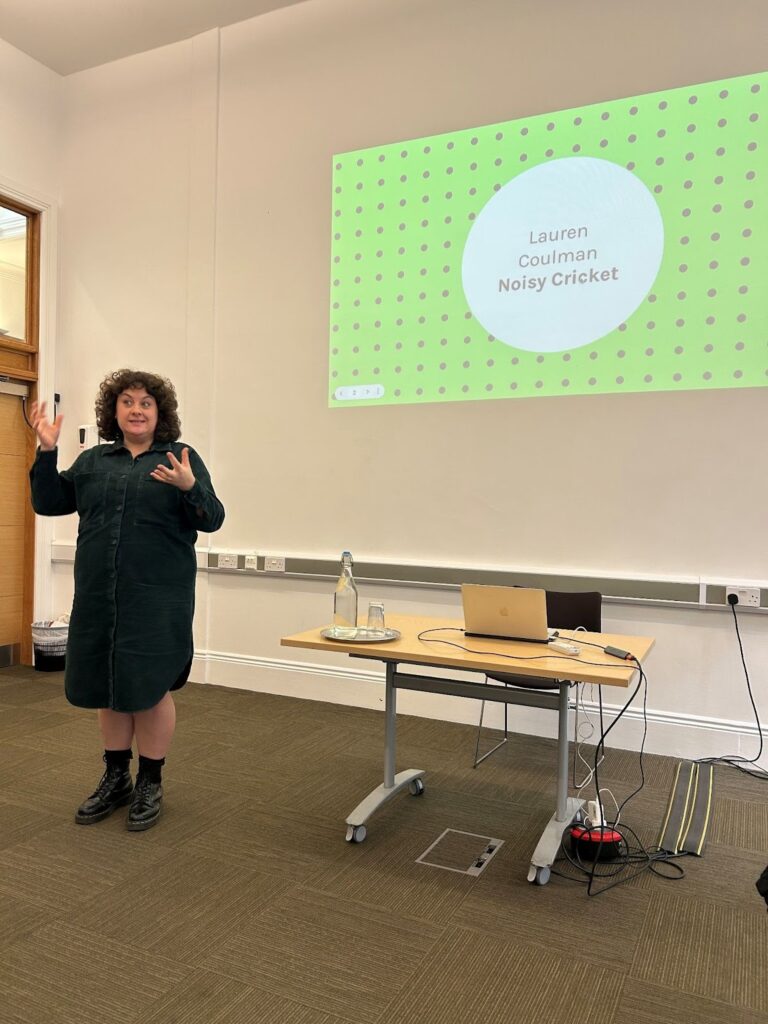
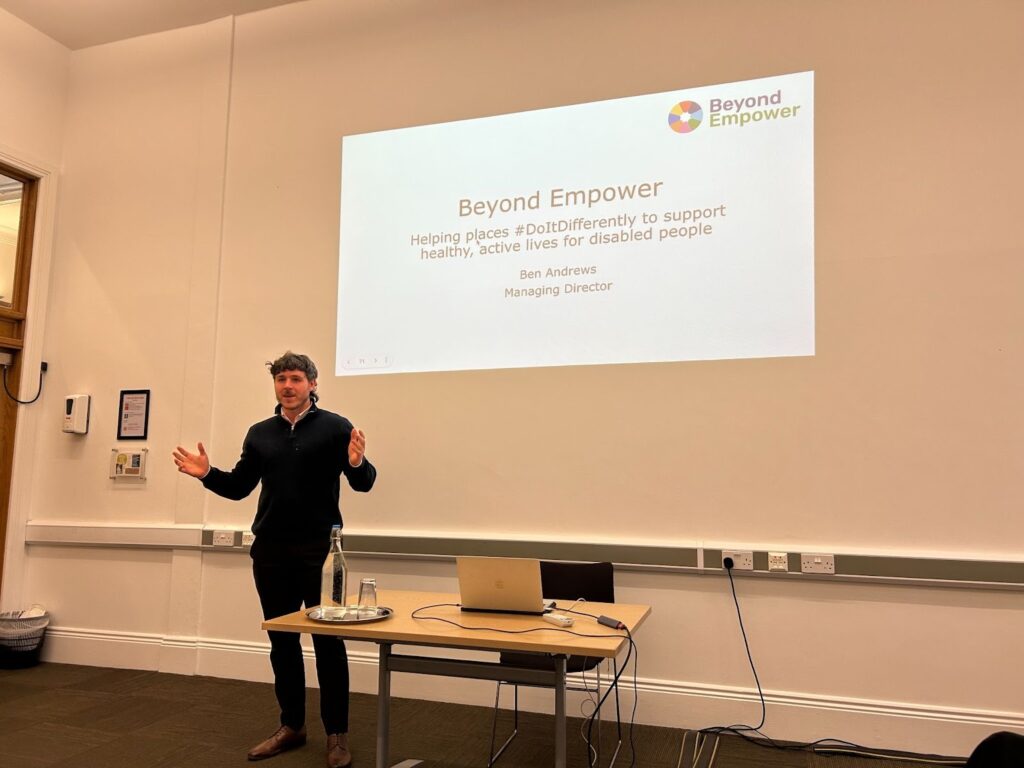
Followed by in-depth explorations of investing in workforce skills and confidence, so they’re better able to engage with the wider context of people’s lives, The Knoll Partnership’s Claire Callaghan, Yvonne Stead and Ola Lawal from Wheels for All, Aspire’s Heather Yates plus Evelyn Keegan from Trafford Council and Ben Andrews from Beyond Empower shared their insights and experiences working in and around social care.
Representing social care endeavours across Greater Manchester, from residential care homes and day centres to community spaces and commissioning plans, and work impacting elderly residents, people with learning difficulties and disabilities and individuals struggling with mental health challenges, every corner of social care was covered.
“People work in social care because they care”, (Evelyn Keegan, Trafford Council)
In doing so, five key learnings emerged, on the needs, approaches and activities essential to realising the potential of physical activity and movement in the social care sector.
Investing in Prevention
With an ageing population and the deconditioning that comes with growing old, the cross-sector gathering recognised the power of physical activity and movement to help people maintain strength and mobility with advancing age. Yet, to enable people to stay in their own homes with minimum interventions, Tracey Harrison made clear the need for a wholesale shift within the system away from crisis and into prevention.
With over 31% of adults in Tameside remaining inactive, mostly in communities with a lack of social mobility, and people struggling with social isolation still in the wake of the COVID-19 pandemic, the ripple effects of both on health and wellbeing are profound. Costing both the social care system and the quality of lives people feel willing and able to lead, the need to get ahead of the underlying mental health issues many face is pressing.
With physical activity and movement providing opportunities for mental wellbeing, physical health, social connection and human joy, integrating it into social care practice is a no-brainer. Yet, with already strained resources and increasing demand for social care services, getting into the spaces in between health and social care, including link roles, community spaces and leisure facilities offers huge potential.
Yet, for these people and places to help the social care system get ahead of people ever needing statutory services, focused investment and dedicated infrastructure is required, affording community link workers like Evelyn Keegan and service providers like Ben Andrew’s Beyond Empower the time, space and resources to truly engage with and invest in people’s lives, especially those most isolated and with the deepest needs, over time.
Changing Social Care Culture
Yet, changing the structures that enable more preventative approaches to social care is only the first step.
With its needs to come a wholesale change in culture, allowing the person-centred approaches necessary to connect with what’s meaningful and motivating to those in need of care. With time and task-based relationships representing the status quo, the majority of social care workers have very limited choices when it comes to reaching and engaging the people they support.
That. plus generational differences in care expectations, and the shock that comes when families realise they’re required to contribute to the cost of social care creates a transactional mindset. Expectations of what should be delivered and the care opportunities currently available, creating a value for money vs quality of care tension between communities and the social care system that remains difficult to negotiate.
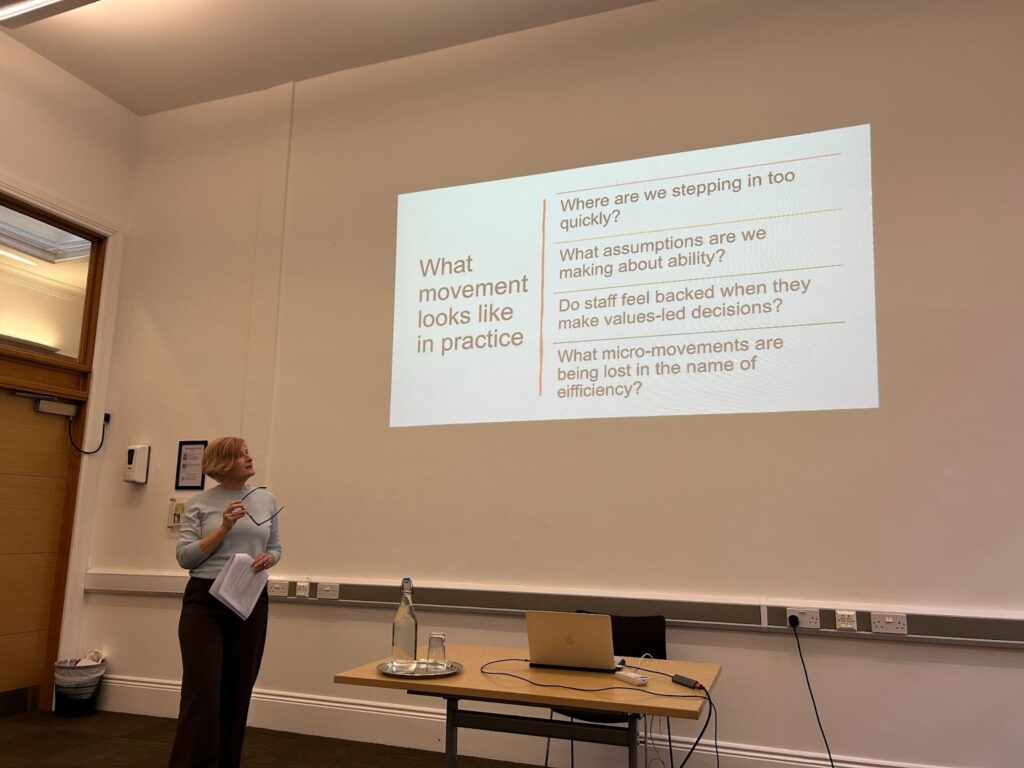
Compounded by society’s perceptions of elderly people’s capability, and the limiting beliefs we have of people with learning difficulties, disabilities and mental health issues, often leads to health and social care workers “doing to” rather than working with people in need of care, empowering and enabling them to manage, engage or make progress by themselves.
Even worse, we don’t trust the people in need of care to even know what they want. Informed by a risk-averse culture with residential homes, day centres and community settings alike, the fear of getting things wrong at best and getting sued as a worst case scenario means we infantilise and inhibit people’s confidence, dignity and wellbeing as a consequence.
“Life without risk is a life not worth living” (Claire Callaghan, The Knoll Care Partnership)
It’s why Claire Callaghan advocates for providing people the space to learn, take risks and fail, for both care workers and residents, so they can see they are capable. Even something as simple as someone making their own tea and toast, or walking down the hall to the bathroom alone, can work wonders. It’s physical activity and movement at its simplest, but once people see what’s possible beyond their fear, new opportunities await.
Shifting Social Care Roles
To allow social care workers to show up in new, more courageous and empowered ways requires roles that allow them to do so. With organisation expectations, commissioning KPIs and regulatory fear taking precedent, making space for physical activity and movement within a time and task-oriented sector will remain challenging. Care workers currently have limited power or capacity with which to challenge the status quo.
It requires top-down permission for care workers to be given the permission to do things differently, whether it comes from leadership like Claire Callaghan’s at Knoll Care Partnerships, or Heather Yates integrating adapted bike training programmes into Aspire’s learning and development for staff. Being given the freedom to advocate for patients and residents is part of this too, building confidence over time.

Whether learning about person-centred care in its broadest sense, or helping care workers develop skills to deliver physical activity and movement as part of their role, it’s important to remember that doing so, you’re inherently investing in staff health and wellbeing too. Yvonne Stead’s work through Wheels for All has shown the therapeutic benefits for staff, and the ripple effects this then has on their wider communities too.
Yet, to make space for doing things differently and being active requires champions at a leadership level, to safeguard the time, space and culture necessary to successful integration. It’s why link roles, from community workers to social prescribing play such a powerful role in the social care system. They show what’s possible when you’re allowed to champion, advocate and work differently, with rather than for those most in need.
Organisation Modelling
People who work in social care do so because they care deeply, but with a constantly churning, ageing workforce, often earning minimum wage, the work to encourage and empower care workers has to start within our organisations. Focusing on people, above and beyond seeing them as a resource and capacity, therefore is integral to achieving person-centred care and integrating physical activity and movement.
In Knoll Care Partnership’s journey from inadequate to outstanding, it required focusing on what matters to residents, and embedding a values-led culture and environment to help empower elderly residents. In Wheels for All, investing in staff skill and confidence was essential to getting people with learning difficulties to reconnect with their own bodies and embrace joy.

It requires leadership, whether you work in a local authority or are an independent care provider, modelling what it looks like to centre people, their lives and what they want as shared beliefs and behaviours. It’s why community organisations like Beyond Empower, or link workers like those working at Trafford Council are so impactful, because they’re permitted to ask, listen and act on what people determine is important.
Allowing staff to do things differently, and removing the fear of failure, requires courage and vision, and is a continuous work in progress as leaders unlearn societal expectation around care the norms upheld across the sector. So, to get there, requires commissioners to step up and create space for new ways of working to be explored, and shared strategic endeavours across regions and boroughs to move from crisis to prevention.
Reconsidering Success in Social Care
To reshape commissioning and strategy requires first reconsidering what success looks like, starting with recognising that without malice or intention to control, the social care system is stuck in a rut of doing things for people. The event speakers and audiences alike recognised the imperative to move from short-term enablement to long-term empowerment and investment in residents and patients capabilities.
From small ways, like someone brushing their own hair, or major ways, like whizzing on a bike around the park, every moment in social care has the potential wake someone up to their own potential. Improved mental wellbeing and physical health are the immediate benefits, but connection, creativity and joy are all feasible too. Fundamentally, social care is about how we make people feel, and that’s where a new understanding of success needs to start.
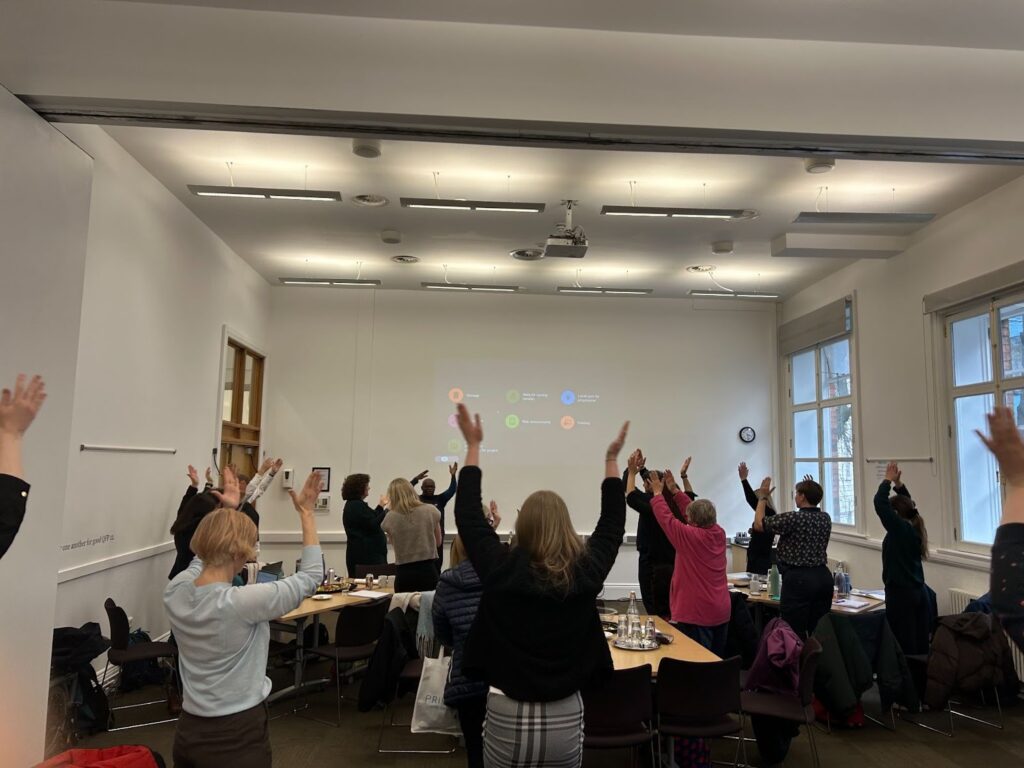
So, from micro habits to active adventures, failing and learning what we’re capable of to helping people determine what they really want and need, the potential for social care prevention lies in a paradigm shift, starting with commissioners and care providers, giving permission to care workers and making more choices available to the people social care exists to serve. Success will look different for everyone and every part of the system, but it should always be uplifting.
For GM Moving, more shared learning events are to follow. The GM Moving team and partners are practising what they preach by listening to what’s needed and championing those trialling new ways of working. We’ll be exploring link roles and workforce wellbeing in more depth over the coming months, with the next event taking place on Tuesday 31 March here:.
“Movement makes me feel more alive”, (Community Participant)
From our speakers and audience, we heard the ambition to create more space to explore what good looks like, face into the discomfort of what’s not working, and share the responsibility of reimagining the social care system, including the role physical activity and movement can play in moving towards prevention. We heard that we’re all responsible for good care, and this is a first step in exploring the role GM Moving and the wider movement for movement can play.